

Nik Thakkar
Logo
289-644-9988
416-736-6500
[email protected]

8400 Jane Street #9, Vaughan, Concord, ON L4K 4L8, Canada

  • Home
  • Communities
    • Milton
    • Mississauga
    • Oakville
    • Brampton
    • Burlington
    • Kitchener
    • Cambridge
    • Guelph
    • Hamilton
    • Waterdown
  • Sellers
    • Sold Listings
    • Selling Guide
    • Be a nosey neighbour
    • See what your home is worth
  • Buyers
    • Buying Guide
    • Stale Listings
    • Calculators
    • Credit Score for Home Mortgage
    • Map Search
    • Save Mortgage Interest
    • Variable vs Fixed Mortgage — How to Choose
    • Sold Home Prices Guide
  • Blog
    • Social
  • About
    • Testimonials
    • Digital Coffee
    • Sitemap
  • Contact
  • Search Your Dream Home
Logo
Home
Communities
  • Milton
  • Mississauga
  • Oakville
  • Brampton
  • Burlington
  • Kitchener
  • Cambridge
  • Guelph
  • Hamilton
  • Waterdown
Sellers
  • Sold Listings
  • Selling Guide
  • Be a nosey neighbour
  • See what your home is worth
Buyers
  • Buying Guide
  • Stale Listings
  • Calculators
  • Credit Score for Home Mortgage
  • Map Search
  • Save Mortgage Interest
  • Variable vs Fixed Mortgage — How to Choose
  • Sold Home Prices Guide
Blog
  • Social
About
  • Testimonials
  • Digital Coffee
  • Sitemap
Contact
Search Your Dream Home
Sign in
  1. Home
  2. Communities
    • Milton
    • Mississauga
    • Oakville
    • Brampton
    • Burlington
    • Kitchener
    • Cambridge
    • Guelph
    • Hamilton
    • Waterdown
  • Submenu for Communities
  • Milton
  • Mississauga
  • Oakville
  • Brampton
  • Burlington
  • Kitchener
  • Cambridge
  • Guelph
  • Hamilton
  • Waterdown
Milton
Burlington
Mississauga
Oakville
Brampton
Kitchener
Cambridge
Guelph
Hamilton
Waterdown

See more:

Milton
Mississauga
Oakville
Brampton
Burlington
Kitchener
Cambridge
Guelph
Hamilton
Waterdown

Agent Image
Nik Thakkar
Real Estate Broker

Facebook X (Twitter) Instagram TikTok YouTube

Contact Information

E-mail Address:
[email protected]

Office Phone:
416-736-6500

Cell Phone:
289-644-9988

By: Nik Thakkar

Ontario Land Transfer Tax Calculator — Complete Guide

Ontario Land Transfer Tax: How to Calculate It, What the First-Time Buyer Rebate Covers, and the Toronto Double Tax Explained

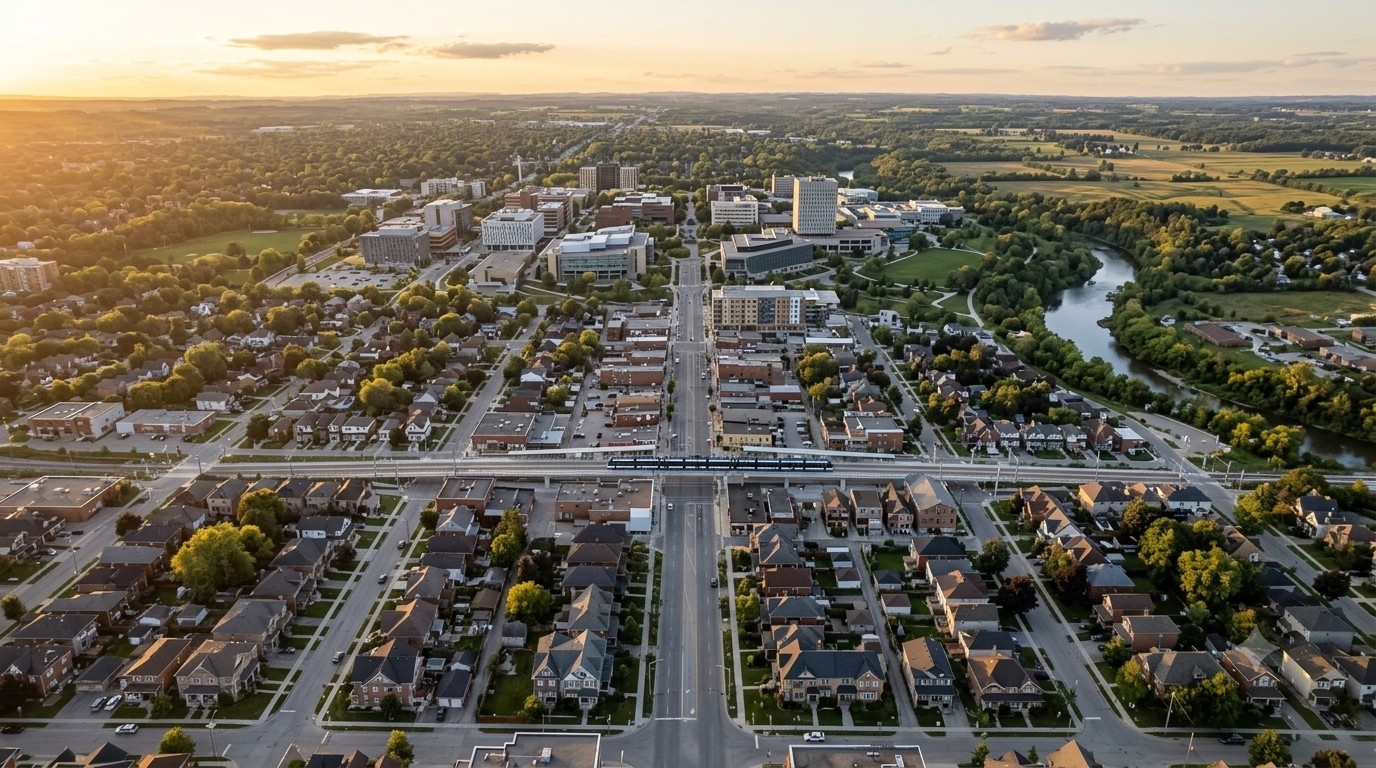
Land transfer tax is one of the largest closing costs in an Ontario real estate transaction and one of the most consistently misunderstood. Buyers routinely underestimate it, misapply the rebate rules, and discover the real number from their lawyer on closing day when there is no opportunity to adjust. This guide walks through exactly how Ontario land transfer tax is calculated, what the first-time buyer rebate covers and who qualifies, how Toronto's additional municipal land transfer tax compounds the cost for city buyers, and worked examples at three price points — $800,000, $1,200,000, and $1,800,000 — so you can budget accurately before you make an offer.

Want to calculate your exact closing costs before you offer? Reply to this email or book a free 15-minute call with Nik — we'll walk through your full closing cost estimate at any price point so there are no surprises on closing day.

Step 1: How Ontario Land Transfer Tax Is Calculated — The Exact Formula

Ontario's land transfer tax is applied on a marginal rate basis — not as a flat percentage of the purchase price. Each portion of the purchase price falls into a different tax bracket, and the total tax is the sum of the tax payable on each bracket. The Ontario provincial LTT rates are as follows:

Purchase Price PortionOntario Provincial LTT RateTax on That Portion
First $55,0000.5%$275
$55,001 – $250,0001.0%$1,950 (on $195,000)
$250,001 – $400,0001.5%$2,250 (on $150,000)
$400,001 – $2,000,0002.0%2.0% of amount over $400,000
Over $2,000,0002.5%2.5% of amount over $2,000,000 (single-family residential)

The total Ontario LTT on any purchase price is the sum of the tax payable in each bracket up to the purchase price. The fixed tax on the first $400,000 always totals $4,475 ($275 + $1,950 + $2,250). For any purchase above $400,000, you add 2.0% of the amount over $400,000 to reach the total. For purchases above $2,000,000 involving single-family residential properties, the 2.5% rate applies to the amount above $2,000,000.

Step 2: Worked Examples at Three Ontario Price Points

Example A: $800,000 Purchase (Milton, Hamilton, Guelph, KW)

  1. 0.5% on first $55,000 = $275
  2. 1.0% on $55,001–$250,000 = $1,950
  3. 1.5% on $250,001–$400,000 = $2,250
  4. 2.0% on $400,001–$800,000 = $8,000
  5. Total Ontario LTT: $12,475

First-time buyer rebate: up to $4,000. Net LTT after rebate: $8,475.

Example B: $1,200,000 Purchase (Mississauga, Burlington, Oakville, Milton premium)

  1. 0.5% on first $55,000 = $275
  2. 1.0% on $55,001–$250,000 = $1,950
  3. 1.5% on $250,001–$400,000 = $2,250
  4. 2.0% on $400,001–$1,200,000 = $16,000
  5. Total Ontario LTT: $20,475

First-time buyer rebate: up to $4,000. Net LTT after rebate: $16,475. Note: the $4,000 rebate maximum is unchanged regardless of purchase price — so its proportional impact diminishes significantly at higher price points.

Example C: $1,800,000 Purchase (Oakville luxury, Lorne Park Mississauga)

  1. 0.5% on first $55,000 = $275
  2. 1.0% on $55,001–$250,000 = $1,950
  3. 1.5% on $250,001–$400,000 = $2,250
  4. 2.0% on $400,001–$1,800,000 = $28,000
  5. Total Ontario LTT: $32,475

First-time buyer rebate: $4,000 maximum (minimal proportional impact at this price point). Net LTT after rebate: $28,475.

Step 3: The First-Time Home Buyer LTT Rebate — Eligibility and How to Claim It

Ontario's first-time home buyer land transfer tax rebate provides a refund of up to $4,000 on the provincial LTT for qualifying purchasers. This rebate is applied at the time of registration — meaning your lawyer deducts it from the amount payable at closing rather than it being a rebate you claim later. Here is every eligibility condition:

  1. You must be a Canadian citizen or permanent resident. Non-permanent residents do not qualify for the rebate, and the Non-Resident Speculation Tax (NRST) may apply separately for non-resident purchasers.
  2. You must be at least 18 years of age.
  3. You must never have owned a home anywhere in the world. This is the most commonly misunderstood eligibility criterion. "First-time buyer" under Ontario's LTT rebate means never having owned — not "first purchase in Ontario," not "first in the past 10 years." A buyer who owned a property in another Canadian province, the United States, or anywhere else in the world does not qualify, regardless of when they owned it or whether they still own it.
  4. If purchasing with a spouse or partner, both must qualify (or the rebate is proportional). If one purchaser qualifies as a first-time buyer and the other does not, the rebate is available only on the qualifying purchaser's ownership share — not the full $4,000. If you and your spouse each own 50% and only you qualify, the maximum rebate available is $2,000 (50% of $4,000).
  5. You must occupy the home as your principal residence within 9 months of purchase. Investment purchases do not qualify for the first-time buyer LTT rebate.
  6. The rebate effectively eliminates LTT on purchases up to approximately $368,000. The total Ontario LTT on a $368,333 purchase is exactly $4,000 — meaning the rebate fully covers the LTT at that price. On purchases above $368,333, the rebate covers the first $4,000 of LTT and you pay the balance. For the full picture of first-time buyer programs that work alongside the LTT rebate, the Ontario first-time buyer strategy guide maps the complete incentive stack.

Step 4: The Toronto Double LTT — How Toronto's Municipal Tax Changes the Closing Cost Picture

Buyers purchasing property within the City of Toronto (not Mississauga, not North York before amalgamation — the current City of Toronto) pay both the provincial Ontario LTT and the City of Toronto's own Municipal Land Transfer Tax (MLTT). The Toronto MLTT is calculated on the same marginal rate structure as the provincial LTT, with its own rates that closely mirror (but are not identical to) the provincial schedule:

Purchase Price PortionOntario LTT RateToronto MLTT RateCombined Rate (Toronto)
First $55,0000.5%0.5%1.0%
$55,001 – $250,0001.0%1.0%2.0%
$250,001 – $400,0001.5%1.5%3.0%
$400,001 – $2,000,0002.0%2.0%4.0%
Over $2,000,0002.5%2.5%5.0%

The Toronto MLTT effectively doubles the land transfer tax burden for City of Toronto buyers. On an $800,000 Toronto purchase, the combined provincial + municipal LTT is approximately $24,950 — versus $12,475 for an equivalent purchase anywhere else in Ontario. First-time buyers in Toronto are eligible for both the provincial rebate (up to $4,000) and the Toronto first-time buyer MLTT rebate (up to $4,475 for the municipal portion), bringing the combined maximum rebate to $8,475. Even with both rebates applied, a Toronto first-time buyer purchasing at $800,000 pays approximately $16,475 in combined LTT — almost double what a first-time buyer pays in Mississauga, Burlington, or Milton at the same price point.

The Toronto double LTT is a significant but often overlooked driver of the buyer migration from Toronto toward GTA commuter belt cities. A buyer who purchases at $950,000 in Milton instead of the same price in Toronto saves approximately $12,000–$15,000 in closing costs on day one — in addition to any price differential between the two markets. That closing cost advantage is real capital that the Milton buyer retains, whereas the Toronto buyer has spent it before they've slept one night in the property.

Step 5: Quick Reference — LTT at Common Ontario Price Points

Purchase PriceOntario LTT (no rebate)Net LTT (FTB rebate applied)Toronto Total LTT (both taxes)Toronto Net (both FTB rebates)
$600,000$8,475$4,475~$16,950~$8,475
$800,000$12,475$8,475~$24,950~$16,475
$1,000,000$16,475$12,475~$32,950~$24,475
$1,200,000$20,475$16,475~$40,950~$32,475
$1,800,000$32,475$28,475~$64,950~$56,475

Note: The figures above are approximations based on current LTT rate schedules. Always confirm the exact amount with your real estate lawyer before closing — LTT calculations can be affected by the nature of the property, allocation between land and building value, and any applicable exemptions or special circumstances.

 Nik's Insider Tip 

The LTT calculation that most buyers miss is the cumulative closing cost budget — LTT is one of four or five significant closing costs that all land on the same day, and buyers who budget for them individually rather than cumulatively are often surprised by the total. On an $850,000 Ontario purchase outside Toronto, a complete closing cost budget looks like this: LTT net of rebate (~$10,475 for a first-time buyer), legal fees ($1,800–$3,000 for a typical purchase including title insurance and disbursements), home inspection ($400–$600), title insurance (~$300–$500 one-time premium), and land registration fees (~$100–$200). Total closing costs excluding moving: approximately $13,000–$15,000. Buyers who have saved exactly their down payment without a separate closing cost reserve typically need to source an additional $13,000–$15,000 from somewhere — often a line of credit or family gift — at closing. Save closing costs separately from your down payment from the beginning of your saving program.

Calculate Your Full Closing Costs Before You Offer

Use the CallNik247 mortgage and closing cost calculators to run your complete purchase cost estimate at any Ontario price point before you make an offer.

 Use the Calculators → 
 Read the Full Buyer Guide → 

Or book a free 15-minute call with Nik — we'll build your complete closing cost budget at your specific purchase price and confirm your first-time buyer rebate eligibility before you offer.
...Read More
By: Nik Thakkar

Homes With Legal Basement Suite Ontario — Buyer Guide

Buying a Home With a Legal Basement Suite in Ontario: How to Verify, What It's Worth, and Which Markets Make It Work

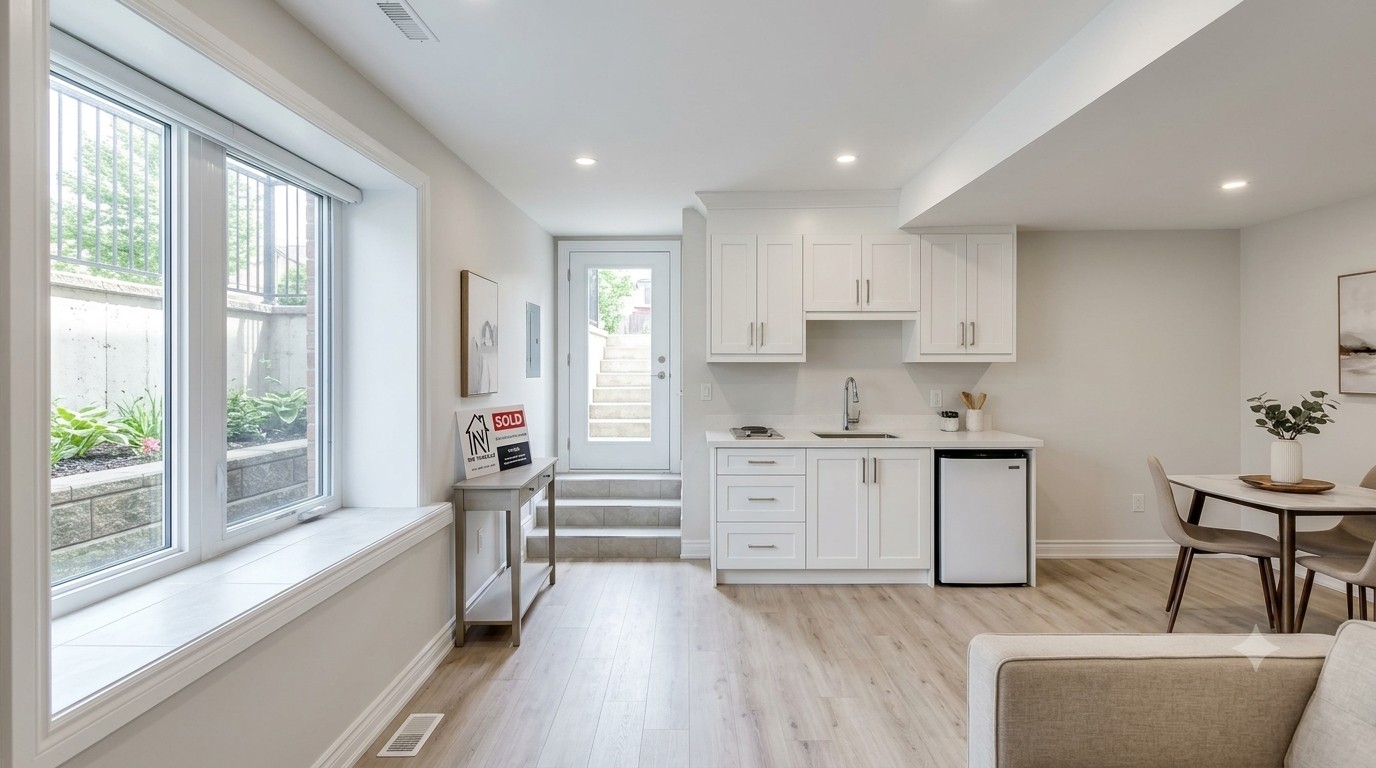
A home with a legal basement suite is one of the most financially powerful first purchases available in Ontario's current market — and it is also one of the most frequently misrepresented features in real estate listings. "Income suite," "in-law suite," "secondary dwelling," "basement apartment" — these phrases appear in hundreds of Ontario listings and carry wildly different implications depending on whether the unit is legal, illegal, unpermitted, or simply unfinished space with a fridge in it. The difference between a legal basement suite and an illegal one is not cosmetic. It is the difference between a rental income that your lender can use to qualify you for a larger mortgage, a tenant relationship that Ontario landlord-tenant law governs, and an insurance policy that covers a claim — versus an income stream that disappears the moment the municipality conducts an inspection or a tenant calls bylaw enforcement. This guide gives you the complete verification playbook, the Ontario building code requirements, a rent offset calculator, and the markets where the income suite thesis works best.

Looking for homes with verified legal income suites in Milton or surrounding markets? Reply to this email or book a free 15-minute call with Nik — we'll filter active listings by basement configuration and walk through the verification process for any property you're considering before you offer.

Step 1: Legal vs Illegal Basement Suite — Why the Distinction Matters More Than You Think

In Ontario, a basement apartment is either permitted and compliant with building code and zoning — in which case it is legal — or it is not, in which case it is illegal regardless of how nice the finishes are, how long the seller has been renting it, or what the listing calls it. There is no "mostly legal" or "legal except for one thing." Non-compliant basement units create four specific categories of risk that buyers need to understand before offering on any property with a secondary unit:

  1. Mortgage qualification risk. Lenders can only use rental income from a legal secondary suite to offset your qualifying income when calculating how much mortgage you can carry. An illegal suite's rental income is invisible to the lender — meaning the income that's supposed to make the purchase affordable doesn't help you qualify. Some buyers discover this after they've committed to a property and before financing is confirmed.
  2. Insurance risk. Most Ontario home insurance policies require disclosure of secondary suites. An undisclosed or illegal rental unit can void your policy coverage in the event of a claim — including a fire originating in the basement, which is the most common scenario. If you're insured for a single-family home and the insurer discovers you have an illegal basement tenant, your claim may be denied entirely.
  3. Municipal enforcement risk. Ontario municipalities increasingly enforce secondary suite regulations through proactive inspections and tenant complaints. A municipality order to vacate the illegal unit eliminates your rental income immediately, potentially while you're carrying the mortgage that was premised on that income being available.
  4. Tenant rights risk. Ontario's Residential Tenancies Act protects tenants in illegal suites as fully as it protects tenants in legal ones. A tenant in an illegal basement apartment cannot be evicted simply because the unit is non-compliant. If you purchase a property with an illegal suite and an existing tenant, you may be unable to remove that tenant without following the full RTA eviction process — which can take 6–18 months and is not guaranteed to succeed.

Step 2: How to Verify Whether a Basement Suite Is Legal — The Exact Process

Verification requires you to go to the source — the municipal building department — not to rely on the listing agent's representation or the seller's verbal confirmation. Here is the exact verification sequence:

  1. Search the municipal permit registry for the property address. Most Ontario municipalities now provide online permit search tools. Search the property address and look for a building permit specifically for a secondary dwelling unit, basement apartment, or accessory dwelling unit (ADU). A permit that was opened and closed (inspections passed) is the gold standard. A permit that was opened and never closed (never inspected to completion) is worse than no permit — it confirms the work was started and then abandoned before code compliance was confirmed.
  2. Call the municipal building department and ask directly. Online systems are sometimes incomplete for older permits. A phone call to the building department with the property address will confirm whether a secondary suite permit was issued, whether it passed all required inspections, and whether the property is currently registered as containing a secondary dwelling unit. In most Ontario municipalities, this is a routine inquiry that takes 5–10 minutes. Do this during the conditional period — not after you've removed conditions.
  3. Check the zoning certificate and property file for zoning compliance. Even a permitted basement apartment may not be legal if the zoning does not permit a second dwelling unit on the property. Ontario's Bill 23 (More Homes Built Faster Act) has made secondary suites as-of-right in most Ontario residential zones, but older properties in some municipalities may have pre-existing restrictions. The zoning confirmation is part of the municipal due diligence and should be verified alongside the permit search.
  4. Have a home inspector with secondary suite experience assess the physical compliance. Even with permits confirmed, a property may have been renovated after inspection or may have deferred maintenance that has moved it out of compliance. Have the inspector specifically evaluate: ceiling height, egress window size and operability, smoke and CO alarm placement, separate electrical panel or sub-panel for the suite, and fire separation between the suite and the main dwelling.

Step 3: Ontario Building Code Requirements — What Makes a Basement Suite Legal

The Ontario Building Code sets minimum requirements for residential secondary suites that every unit must meet to be considered legal. The following are the most commonly checked and most frequently failed criteria:

  1. Ceiling height: minimum 1.95 metres (6 feet 5 inches). This is the most common reason basement suites fail code in Ontario's older housing stock — pre-1980s homes were frequently built with basement ceiling heights of 7 feet or less, and ductwork, beams, and structural elements can reduce functional headroom below the minimum. Measure actual clearance, not listed floor-to-ceiling height. A suite with a 2.0 metre nominal height that has a beam at 1.85 metres is non-compliant at the beam.
  2. Egress window: minimum clear opening of 0.35 square metres, with minimum dimension of 380mm. Every bedroom in a secondary suite must have an egress window large enough for emergency exit by an adult. Basement windows in older homes are frequently too small. An egress window that doesn't meet minimum dimensions fails code and is also a genuine safety issue in the event of a fire. Replacement egress windows cost $800–$2,000 per window installed, which is worth knowing before you offer.
  3. Separate entrance. The suite must have an entrance that does not require passage through the main dwelling's living space. A suite that can only be accessed through the main kitchen or living room is not compliant. Exterior side entrance doors, walk-out configurations, and exterior stairwell entries all satisfy this requirement.
  4. Fire separation between units. The Building Code requires a fire separation of at least 30 minutes between the secondary suite and the main dwelling, achieved through fire-rated drywall on shared walls and ceilings. A basement suite finished without fire-rated drywall on the ceiling (which is the floor of the main dwelling) is not compliant regardless of how finished it otherwise appears.
  5. Interconnected smoke and CO alarms. Both the suite and the main dwelling must have interconnected smoke alarms and carbon monoxide detectors — meaning when one triggers, all units are alerted. This is an electrical requirement that must be inspected and confirmed, not just visually assessed.
  6. Separate bathroom and kitchen. The suite must have its own bathroom and kitchen facilities. A basement room with a bar fridge and a hot plate does not constitute a kitchen under the Building Code. Minimum kitchen requirements include a sink with running water, a cooking surface, and counter space — all with proper plumbing and ventilation.
  7. Minimum suite size: 145 square feet for a bachelor/studio, plus minimum bedroom sizes. A compliant bachelor suite must be at least 145 sqft of habitable space. Bedrooms must be at least 7 sqft of floor space per occupant with a minimum dimension of 2.1 metres. Extremely small basement conversions may fail on size alone.

Step 4: The Rent Offset Calculator — What a Legal Suite Actually Does to Your Carrying Cost

The financial case for a home with a legal basement suite is most powerfully made through the net carrying cost after rental offset. Here is the worked math for Milton — the market where the income suite purchase thesis is most compelling for first-time and move-up buyers.

ScenarioWithout SuiteWith Legal Suite
Purchase price (Milton detached)$950,000$1,020,000 (suite premium ~$70k)
Down payment (20%)$190,000$204,000
Monthly mortgage (5.5%, 25yr)~$4,700/mo~$5,000/mo
Basement suite rental income (Milton)$0$1,800 – $2,200/mo
Net monthly carrying cost~$4,700/mo~$2,800 – $3,200/mo
Annual net saving vs no-suite equivalent—$18,000 – $22,800/year

The suite-equipped Milton home costs $70,000 more to purchase but delivers $18,000–$22,800 per year in reduced net carrying cost. The $70,000 premium pays back in 3.1–3.9 years through the rental offset alone — after which every year of the suite's operation represents a direct financial advantage over the equivalent non-suite property. Over a 10-year hold, the suite buyer is ahead by $110,000–$158,000 in cumulative carrying cost savings net of the purchase premium, independent of any appreciation differential between the two properties. For the practical guide to converting a bungalow to a dual-income asset, the Milton bungalow conversion guide covers the renovation approach in detail.

Step 5: The Best Ontario Markets for Income Suite Purchases Right Now

  1. Milton — best suite-to-price ratio in the GTA commuter belt. Milton's newer builds (2005–2015) frequently have above-grade basements with 9-foot ceilings, large windows, and walkout configurations that reduce the cost and complexity of creating a legal suite dramatically. The rental market in Milton for a 2-bedroom legal basement unit runs $1,800–$2,200 per month — supported by GO train commuter demand, hospital workers, and the city's growing manufacturing and logistics employment base. Bill 23's as-of-right secondary suite permissions mean zoning approval is no longer a barrier in most Milton residential zones.
  2. Hamilton Mountain — highest yield per dollar invested. Hamilton Mountain's older bungalow stock (1960s–1980s) is the most frequently converted income suite inventory in the GTA commuter belt, because the bungalow form factor makes basement suite conversion relatively straightforward and the $600,000–$750,000 purchase price produces the most attractive yield-to-entry ratios. A fully legal Mountain basement suite rents for $1,400–$1,800 per month — lower than Milton's but proportionally higher relative to the purchase price. The yield math is most compelling in the Mountain for buyers with renovation tolerance.
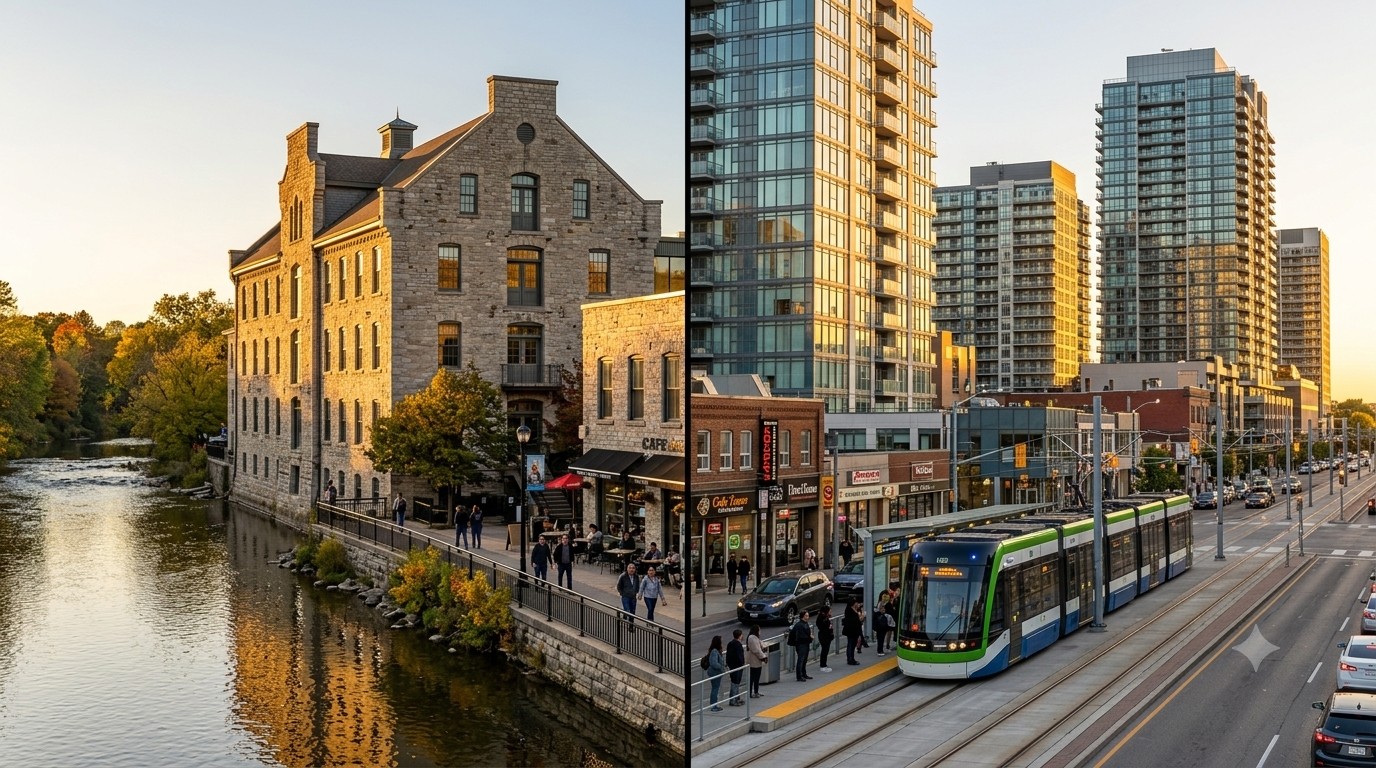
  3. Kitchener-Waterloo — student and professional rental demand combined. KW's combination of University of Waterloo student demand and professional tech-sector rental demand creates the most diverse and resilient basement suite tenant market of any Ontario secondary city. A legal basement suite near the University of Waterloo rents for $1,600–$2,200 per month depending on bedroom count and condition. Downtown Kitchener suites attract professional tenants at $1,400–$1,900 per month. The ION LRT corridor adds a walkability premium that further supports suite rental rates.
  4. Brampton — highest suite density, competitive but liquid tenant market. Brampton has the highest proportion of homes with basement suites (legal and illegal) in the GTA — a product of large detached homes on generous lots purchased by multi-generational families. The legal suite market in Brampton rents for $1,500–$1,900 per month for a 2-bedroom unit. The challenge in Brampton is distinguishing legal from illegal suites — the prevalence of basement conversions in the market means many properties represent units at various stages of compliance, and verification is especially important here.
 Nik's Insider Tip 

The income suite purchase I consistently recommend in the Milton market is a 2008–2014 detached with a walkout basement in the Harrison or Scott neighbourhood — specifically properties where the walkout creates a ground-level entrance on the rear of the home rather than a traditional stairwell side entrance. Walkout basement suites in Milton almost always meet ceiling height requirements naturally (the grade difference gives you the headroom), almost always have adequate window egress on at least three walls, and allow for a tenant entrance that is genuinely private and separate from the main dwelling rather than the adjacent-door configuration that creates friction with tenants who feel like they're entering through the side of your house. The walkout configuration adds $30,000–$50,000 to the purchase price of an equivalent non-walkout property, and it saves $15,000–$25,000 in basement finishing costs because the egress, the entrance, and the natural light are already there. When I'm working with buyers who want a legal suite in Milton, the walkout is always the first filter I apply to the listing search.

Browse Milton Homes With Income Suites and Basement Apartments

Active Milton listings filtered for homes with basement or income suite potential — including separate entrance, finished basement, and walkout configurations.

 Browse Milton Income Suite Homes → 

Or book a free 15-minute call with Nik — we'll walk through the permit verification process for any specific property you're considering and tell you honestly whether the suite qualifies as legal before you offer.

...Read More
By: Nik Thakkar

Homes With Pools for Sale Ontario — Buyer Guide

Buying a Home With a Pool in Ontario: The Real Costs, Resale Value Data, and What to Check Before You Offer

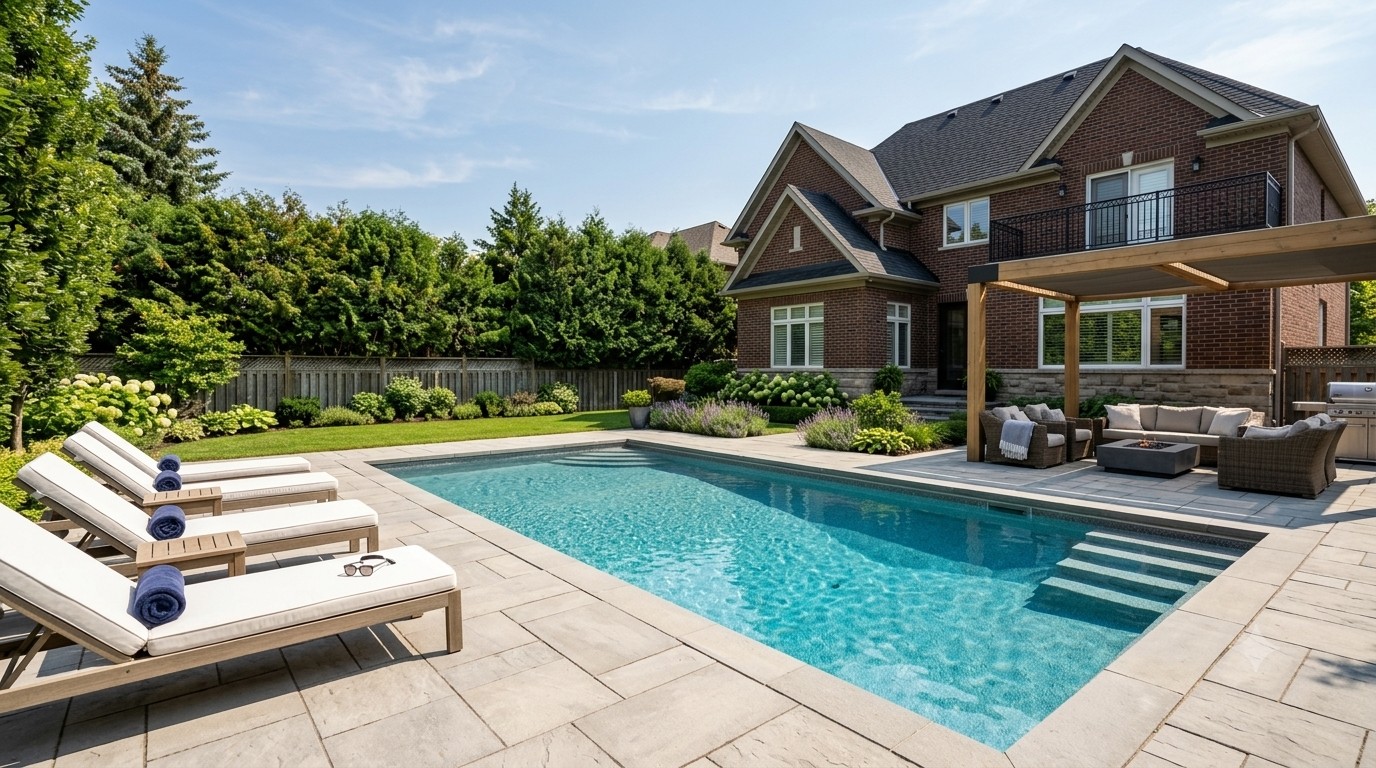
A home with a pool sells the dream better than almost any other feature in Ontario real estate — and it also creates more post-purchase surprises than almost any other feature if you don't do the diligence properly. Buyers who purchase pool homes without understanding the annual carrying cost, the resale value reality in their specific market, and what a professional pool inspection actually covers are the ones who spend year one discovering what year two is going to cost them. This guide gives you the complete picture: maintenance costs by pool type, the insurance premium increase you should budget for, the resale premium data by GTA city, and a checklist of what to have inspected before you offer on any Ontario pool property.

Looking for homes with pools in Milton, Oakville, or Mississauga? Reply to this email or book a free 15-minute call with Nik — we'll walk through which pool home listings make financial sense for your budget and carrying cost tolerance before you fall in love with a property that doesn't pencil out.

Step 1: Annual Pool Maintenance Costs in Ontario — What You're Actually Signing Up For

The number most buyers receive from listing agents when they ask about pool costs is the chemical cost — typically quoted as "$50–$80 per month in summer." That number is real and it is also incomplete by approximately $3,000–$8,000 per year depending on pool type, age, and condition. Here is the full annual carrying cost picture for Ontario's three most common residential pool configurations.

  1. Inground pool (concrete or fibreglass) — $4,500–$9,000 per year

    The most common pool type in Ontario's suburban GTA markets. Annual costs include: opening and closing service ($400–$700 combined), chemicals and water treatment ($600–$1,200 per season), electricity for pump and filtration system ($800–$1,400 per season), routine maintenance visits ($500–$900 per season), and the capital reserve that most owners don't acknowledge — liner replacement every 8–12 years ($4,000–$8,000 for vinyl liner pools), pump replacement every 8–12 years ($1,200–$2,000), and heater replacement every 10–15 years ($2,500–$4,500). Amortised over the pool's 15–20 year lifecycle, the capital reserve adds $600–$1,200 per year to the effective annual cost. A pool that costs $1,500 in a good year costs $8,000–$12,000 in the year the liner and pump fail simultaneously.
  2. Above-ground pool — $1,200–$3,500 per year

    Above-ground pools have lower chemical costs (smaller water volume), no significant capital replacement costs in the short term, and easier opening/closing logistics. The trade-offs are well-documented from a resale perspective: above-ground pools add minimal to no resale value in most GTA markets and in some cases create a negative impression for buyers who see them as a removal liability. If the above-ground pool is a genuine feature you'll use, budget for what it costs and enjoy it. If you're hoping it contributes to the home's resale value the way an inground pool might, that expectation is not supported by transaction data.
  3. Saltwater inground pool — $3,800–$7,500 per year

    Saltwater systems have lower annual chemical costs than traditional chlorine pools (approximately 40–60% less) because the salt chlorinator generates its own chlorine from salt. The trade-off is higher upfront equipment cost and the salt chlorinator cell replacement every 3–5 years ($700–$1,500). Net annual cost is typically $500–$1,500 per year less than an equivalent traditional chlorine pool, while providing a gentler swimming experience that many owners prefer. Saltwater pools have become the dominant new-build pool configuration in Oakville, Mississauga, and Milton in the past decade, which means an increasing proportion of Ontario's newer pool home inventory carries this configuration.

The checklist for homebuying due diligence is covered in depth in the GTA home purchase resiliency guide — the pool-specific section of that checklist is expanded in Step 5 below.

Step 2: The Insurance Premium Increase — What a Pool Actually Adds to Your Annual Policy

A residential swimming pool is classified as an "attractive nuisance" under Ontario property insurance law — meaning it creates a liability exposure that insurers price explicitly into home insurance premiums. Buyers who don't account for this cost in their carrying cost calculation are consistently surprised at renewal.

  1. Typical premium increase: $300–$900 per year. The range varies by insurer, pool type, fencing compliance, and existing policy level. Inground pools typically add more than above-ground pools. Pools with proper four-sided fencing, compliant gates, and pool alarms attract lower premiums than pools without these safety features. Budget $500–$700 per year as a reasonable midpoint for an inground pool addition to a standard Ontario home insurance policy.
  2. Fencing compliance is not optional — it's provincial law. Ontario's Safety Fence Act and many municipal bylaws require that residential pools be enclosed by a minimum 1.2-metre fence with self-closing, self-latching gates. Non-compliant fencing can void your liability coverage in the event of a pool-related injury claim — which transforms the insurance question from "what's my premium?" to "am I personally liable for a drowning?" When purchasing a pool home, verify fence compliance before closing, not after.
  3. Pool liability umbrella: worth considering. For pool homes in the $1.0M+ range, an umbrella liability policy (typically $1M–$2M in additional coverage for $200–$400 per year) provides meaningful protection against the low-probability but high-severity claim that a standard home insurance policy may not fully cover. Not required, but worth the conversation with your insurance broker at time of purchase.

Step 3: Pool Resale Value Premium — What the Data Says by GTA City

The pool resale premium question is the one where buyer expectations most consistently diverge from market reality. The short version: pools add more resale value in some GTA markets than others, the premium varies by property price point, and the premium is almost never large enough to justify the pool's installation cost as a pure investment. What a pool does do is narrow the buyer pool (buyers who don't want a pool are eliminated) and accelerate decision-making for buyers who do — which typically means faster sales and stronger competition when the market is active, but slower sales and more negotiation leverage in slower markets.

City / MarketEst. Pool Premium vs Non-Pool CompsPrice Point Most ResponsiveNotes
Oakville+5–10%$1.3M – $2.5M+ detachedStrongest GTA pool premium — buyer expectations at this price point include pool as a standard luxury feature
Mississauga+4–8%$1.0M – $1.8M detachedLorne Park and Port Credit pockets show stronger premium; Meadowvale and Lisgar less so
Burlington+4–7%$1.1M – $2.0M detachedRoseland and Millcroft backing streets most responsive; Alton Village less so
Milton+3–6%$950k – $1.5M detachedPremium concentrated in Hawthorne Village and premium Scott/Harrison streets; entry-level Milton pool homes see minimal premium
Hamilton / KW+2–4%$800k – $1.2M detachedWeakest pool premium in the commuter belt — narrower buyer pool, less luxury expectation at prevailing price points

The resale data confirms what experienced GTA agents observe consistently: pool premiums are price-point dependent, not universal. A pool on a $750,000 Milton townhome adds little to no resale value and may eliminate a segment of buyers who don't want the maintenance liability. The same pool configuration on a $1.4M Oakville detached in a neighbourhood where adjacent properties also have pools is effectively an expected feature, and its absence would be a relative negative. The premium isn't in the pool — it's in matching the pool to a price point and neighbourhood where buyer expectations include it.

Step 4: Which Ontario Cities Hold Pool Value Best Over Time

Pool value retention is not the same as pool resale premium. Retention refers to how much of the pool's perceived value holds over time as the pool ages and as buyer preferences evolve. Three factors determine which Ontario markets retain pool value most effectively:

  1. Neighbourhood pool saturation. Markets where a high proportion of comparable homes already have pools are the strongest for value retention — the pool is a neighbourhood standard rather than a differentiating feature, and buyers researching those areas are pre-filtered for pool acceptance. Oakville's southeast quadrant and the Lorne Park / Clarkson corridor in Mississauga have the highest pool saturation in the GTA commuter belt and correspondingly the most stable pool premiums.
  2. Lot size relative to pool footprint. Pools on lots where the pool dominates the usable yard — common on the tighter 35–40 foot lots in newer Milton and Brampton subdivisions — lose value more quickly than pools on 55–80 foot lots where there is meaningful lawn space remaining. Buyers with young children in particular actively penalise pools that leave no usable outdoor space beyond the pool deck.
  3. Pool age and condition at purchase. A 5–8 year old properly maintained fibreglass or concrete inground pool with recent mechanical service holds its value well. A 20+ year old vinyl liner pool on an aging mechanical system is approaching its capital replacement cycle and is priced by informed buyers as a liability rather than a premium — even if the listing presents it as a feature.

Step 5: The Pool Inspection Checklist — What to Have Checked Before You Close

A standard home inspection does not cover a pool in sufficient depth. Always insist on a dedicated pool inspection by a certified pool inspector — budget $250–$450 for a thorough pool-specific inspection that covers the following:

  1. Shell integrity. Concrete pools should be inspected for cracks, especially in the floor and around the main drain. Fibreglass pools should be checked for delamination, blistering, and oxidation. Vinyl liner pools require liner age verification — a 12+ year old liner is approaching replacement.
  2. Pump, filter, and heater condition and age. Request the service history. A pump with no service records and no known age is a replacement risk within 1–3 years. The heater is the most expensive single mechanical component — confirm age, fuel source (gas vs electric vs heat pump), and whether it has been recently serviced.
  3. Electrical safety compliance. Pool electrical systems in Ontario are subject to ESA (Electrical Safety Authority) requirements including GFCI protection on all pool-adjacent circuits, bonding of all metal pool components, and proper grounding. Non-compliant electrical presents both a safety risk and an insurance liability. An ESA inspection or electrical inspection component within the pool inspection is worth requesting.
  4. Fencing compliance. As noted in Step 2, Ontario law requires compliant four-sided pool fencing. Measure fence height (minimum 1.2 metres), verify self-closing and self-latching gate operation, and confirm that there are no non-compliant access points — including gates that open inward rather than outward, which violates Ontario pool fence requirements.
  5. Permit history. Inground pools in Ontario require a building permit for installation. Request confirmation that the pool was permitted — unpermitted pools can create issues at sale and potentially require remediation or removal orders from municipalities with active enforcement. Most Ontario municipalities allow permit retroactivity, but it's a cost and complication you want to know about before closing rather than after.
  6. Plumbing — leak test. A pressure test on the pool's underground plumbing lines confirms whether there are leaks in the return or suction lines. Underground plumbing leaks are expensive to repair ($3,000–$8,000+ depending on location) and are not detectable by visual inspection. This test is particularly important for pools that have not been opened recently or where the seller cannot confirm the pool "holds water."
  7. Deck and coping condition. Concrete or paver pool decks develop cracks and settlement over time. Coping — the cap stones around the pool perimeter — can separate from the pool shell and become a trip hazard and a moisture ingress point. Both are repairable but both cost money. Know the condition before you offer.
 Nik's Insider Tip 

The pool home purchase I consistently advise buyers to walk away from is a well-presented property where the pool was installed in 1998–2005, the vinyl liner has never been replaced, and the seller is quoting the pool as a premium feature with no recent service records. That is a $15,000–$25,000 capital replacement event within 2–3 years of closing — liner, pump, potentially heater — that is not reflected in the list price. The pool home purchase I consistently advise buyers to target is a 2012–2018 fibreglass inground with a documented annual service history, a saltwater system, and proper fencing — on a lot where the pool leaves at least 25–30 feet of usable lawn beyond the pool deck. That configuration gives you a pool that works, costs what it should to maintain, adds genuine value in resale, and doesn't force you to choose between the pool and a functional backyard. The age and service history of the mechanical systems are the variables that separate a pool asset from a pool liability.

Browse Homes With Pools in Milton and Oakville

Active listings filtered by pool feature in Milton and Oakville — the two GTA markets with the strongest pool value retention and most active pool home inventory.

 Milton Homes With Pools →   Oakville Homes With Pools → 

Or book a free 15-minute call with Nik — we'll walk through which pool home listings are genuinely priced correctly and which are pricing in a pool that's about to cost you $20,000.

...Read More
By: Nik Thakkar

Waterloo Region Real Estate Investment Guide

Waterloo Region Real Estate Investment: The University Rental Demand, ION LRT Corridors, and Duplex ROI That Ontario Investors Keep Missing

Waterloo Region — encompassing Kitchener, Waterloo, and Cambridge — is Ontario's most structurally supported rental market outside of Toronto, and it is systematically underpriced relative to those fundamentals. Three demand drivers converge here that no other Ontario secondary market replicates simultaneously: 47,000+ students at the University of Waterloo and Wilfrid Laurier creating permanent rental demand that is counter-cyclical to the broader market, the ION LRT creating a measurable and documented appreciation corridor that is still mid-cycle on its eastern segments, and a Cambridge-to-Kitchener duplex/triplex market where cap rates remain viable in a province where positive cashflow has become structurally difficult. This post maps all three investment theses with the data that separates conviction from speculation.

Building a Waterloo Region investment position or evaluating a specific property? Reply to this email or book a free 15-minute call with Nik — we'll run the cap rate, cashflow, and appreciation thesis against your specific capital position and timeline before you commit to a direction.

University of Waterloo Rental Demand: Why 47,000 Students Change the Investment Calculus

The Structural Demand Thesis

The University of Waterloo (40,000+ students) and Wilfrid Laurier University (approximately 19,000 students) create a combined student body of approximately 59,000, of which a significant majority need off-campus housing at any given time. This demand is not interest-rate sensitive, not correlated with the employment cycle, and not subject to the same discretionary household formation decisions that drive civilian rental demand. When the broader rental market softens during a recession, student rental demand remains structurally constant because enrolment continues and on-campus housing capacity is finite. That counter-cyclical characteristic is the defining investment advantage of university-adjacent rental positioning in Ontario.

The University of Waterloo's co-op program — the largest co-op program in the world by student enrolment — creates a rental demand pattern unique to Waterloo: students cycle through 4-month work terms in rotation, meaning that the Waterloo rental market has continuous turnover and continuous replacement demand at every point in the academic year rather than the sharp September peak and April trough that characterise most university towns. A well-positioned 4-bedroom student rental near UW campus turns its tenant base 2–3 times per year, with each transition resetting to current market rates rather than carrying legacy below-market tenancies.

The rental income potential from a student-oriented property near the University of Waterloo and Wilfrid Laurier campuses reflects the co-op rotation dynamic and the overall tightness of the Waterloo student housing market. The following represents approximate per-room monthly rental ranges in the student rental corridor (Columbia Street West, University Avenue, Lester Street, Seagram Drive vicinity):

Property TypePer Room / MonthTotal Monthly (est.)Annual Gross Revenue
4-bed student house (near UW)$900 – $1,100/room$3,600 – $4,400$43,200 – $52,800
5-bed student house (near UW)$850 – $1,050/room$4,250 – $5,250$51,000 – $63,000
2-bed condo (ION corridor)N/A (whole unit)$2,100 – $2,600$25,200 – $31,200
Duplex (upper + lower, Kitchener)N/A (per unit)$3,400 – $4,200 combined$40,800 – $50,400

The student rental thesis is not without management complexity. Student tenancies require more active landlord engagement than professional tenancies — higher turnover, more maintenance demand per square foot, and the co-op cycle's irregular lease terms create administrative friction that self-managing owner-investors need to budget time for. The gross revenue numbers above should be netted against property management fees (8–12% of gross for professional management), maintenance reserves (approximately 1–1.5% of property value annually on student properties), vacancy provisions (2–4% given co-op rotation), and insurance premiums that reflect the student-use classification. Net yields after these deductions typically run 3.5–5.5% on the student rental thesis for UW-adjacent detached properties — not exceptional cap rates, but supported by the appreciation thesis that the detail analysis of the KW tech corridor maps in full.

ION LRT Appreciation Corridors: Where the Transit Premium Has Landed and Where It Hasn't Yet

The ION LRT Stage 1 corridor — running from Conestoga Mall in Waterloo through Uptown Waterloo and Downtown Kitchener to Fairway Station in east Kitchener — has produced differentiated appreciation premiums across its length since opening in 2019. The investment opportunity lies in understanding which station segments have fully priced in the transit premium and which retain forward appreciation potential for buyers entering now.

ION SegmentPostcodesEst. Premium vs Non-ION CompsInvestment Thesis
University / Waterloo coreN2L, N2J+14–20% (fully priced)Strong student rental income; appreciation largely captured. Hold thesis, not entry thesis.
Uptown WaterlooN2J, N2K+10–15%Premium stable. Mixed professional / student rental demand. Entry prices high.
Downtown Kitchener coreN2G, N2H+10–16% (still appreciating)Innovation District revitalisation ongoing — appreciation not yet complete. Duplex/multiplex play on older building stock.
Block Line to Fairway (east KIT)N2C, N2B+5–10% (premium not yet captured)Highest forward upside — entry prices 15–20% below core ION corridor. Transit adjacency underpriced. Stage 2 Cambridge extension tailwind.
Stage 2 Cambridge corridor (future)N1R, N3C, N3HPre-appreciation windowSpeculative — highest risk, highest potential appreciation on confirmed completion. Cambridge duplex/triplex play at current cap rates.

The clearest active entry opportunity in the ION corridor for investors is the Block Line to Fairway segment in east Kitchener — the last stretch of the existing Stage 1 line that has not yet priced in the transit adjacency premium that the University and Downtown stations have fully captured. Properties within 800 metres of Block Line Station and Fairway Station in the N2C and N2B postcodes are currently trading at prices set by local buyers whose reference frame does not yet fully discount the transit accessibility. As the ION line's passenger numbers mature and the Stage 2 Cambridge extension moves through approvals, that reference frame will update — and the properties bought before that update are the ones that capture the appreciation event.

Duplex and Triplex ROI: Where Waterloo Region's Income Property Case Is Strongest

Ontario's rental market broadly has seen cap rate compression over the past decade as property values have risen faster than rents. Waterloo Region is not immune to this trend, but it retains viable cap rates on multiplex properties in specific sub-markets that most of the GTA and Hamilton-Burlington corridor has already lost. The following analysis covers the two income property configurations most relevant to Waterloo Region investors: purpose-built or converted duplexes in the $650,000–$900,000 range, and triplexes in the $900,000–$1,200,000 range.

PropertyPurchase PriceGross Annual IncomeEst. Cap RateLocation
Legal duplex (2×2-bed)$680k – $780k$40,800 – $48,000~4.2–5.0%Downtown Kitchener N2G/N2H
Legal duplex (upper + lower)$650k – $750k$38,400 – $46,200~4.5–5.5%Central Cambridge N1R/N1S
Triplex (3 units)$900k – $1.1M$57,600 – $69,600~4.8–5.8%Preston / East Cambridge N3H
Student house conversion (4–5 bed)$820k – $1.0M$43,200 – $63,000~4.0–5.5%UW-adjacent Waterloo N2L

Cap rates in the 4.2–5.8% range represent viable — if not extraordinary — income property returns for Ontario investors. Context matters: GTA duplex cap rates in comparable urban cores (Hamilton lower city, Mississauga, Brampton) have compressed to 3.0–4.0% at current prices, which has made cashflow-positive operation structurally difficult at most financing rates. Waterloo Region's persistence in the 4–6% cap rate band is a function of lower property entry prices relative to rental income — a function of the market's distance from GTA pricing pressure and its own absorption rate on income property supply. For investors running a 25% down payment scenario on a $720,000 Cambridge duplex at current interest rates, the cashflow position is tight-to-neutral in year 1 and improves meaningfully as rents escalate and the mortgage amortises over years 3–7.

Cambridge vs Kitchener for Rental Income: Which Market Is the Better Investment Entry Right Now

Cambridge is systematically underpriced relative to Kitchener on an income property basis — and that underpricing is the clearest active opportunity in Waterloo Region for investors who can operate without the ION LRT thesis. The case for each market maps cleanly:

Cambridge (N1R, N1S, N3C, N3H): Property entry prices in Cambridge run approximately 10–18% below equivalent Kitchener income properties. A duplex that costs $680,000 in central Kitchener is available for $580,000–$620,000 in central Cambridge — a $60,000–$100,000 saving that directly improves the cap rate by 1–1.5 percentage points without a corresponding reduction in rental income, because Cambridge's employment base (Toyota Manufacturing, ATS Automation, Cambridge Memorial Hospital, the 401 logistics corridor) supports professional-grade tenant demand that produces similar rental rates to Kitchener's non-student market. Cambridge's rental market is less sexy than Kitchener's tech-adjacent narrative but it is more stable, less subject to the management complexity of student tenancies, and entering a forward appreciation cycle as the Stage 2 ION extension moves through approvals.

Kitchener (N2G, N2H, N2B, N2C): Kitchener's income property market is built around the ION LRT corridor and its transit-adjacency premium. The Downtown Kitchener core postcodes (N2G, N2H) have the strongest tenant quality for professional rentals — tech workers, University employees, and young professionals who prefer walkable transit access — but entry prices reflect that positioning. The east Kitchener postcodes (N2B, N2C) offer the best current entry-to-rental ratio for investors willing to accept less prestigious locations in exchange for better cap rates and Stage 2 ION forward appreciation exposure. The trade-off: management friction is higher in east Kitchener's older rental stock, and the tenant quality mix is less homogeneous than the professional-rental corridor near the Downtown Kitchener ION stations.

The investor decision framework: if your priority is capital preservation and income yield, Cambridge's lower entry prices and stable professional rental demand make it the superior choice at current prices. If your priority is appreciation potential and you're comfortable with the management complexity of a tighter student-and-professional rental market, Kitchener's ION corridor — specifically the Block Line to Fairway east segment — offers the better forward return profile. Most sophisticated Waterloo Region investors are building exposure to both markets simultaneously rather than treating them as either/or.

 Nik's Insider Tip 

The Waterloo Region income property I consistently point analytical investors toward right now is a legal duplex in Preston, Cambridge (N3H postcode) — specifically an upper/lower configuration on a 40–50 foot lot within walking distance of the Cambridge Memorial Hospital or the Hespeler Road commercial corridor. These properties are available in the $620,000–$700,000 range, generate $3,400–$3,900 per month in combined rental income from two professional-tenant units, and sit in the Stage 2 ION extension corridor that will eventually connect Cambridge to the Kitchener LRT network. You're currently buying at Cambridge's non-transit prices while the Stage 2 timeline advances. The cap rate works today; the appreciation thesis adds a second return layer that doesn't require the ION to be built to generate value — the market will begin pricing it in during approvals, not at opening. The investor who waits for the LRT to open before buying buys at post-appreciation prices. The investor who buys during approvals captures both the income yield and the infrastructure premium.

Browse Kitchener and Cambridge Investment Properties

Active listings across Kitchener and Cambridge — filter by postcode to compare duplex and income property inventory in the ION corridor and Cambridge rental market.

 Browse Kitchener Listings →   Browse Cambridge Listings → 

Or book a free 15-minute call with Nik — bring your capital position and target yield and we'll map the specific postcodes and property types that fit your Waterloo Region investment thesis.

...Read More
By: Nik Thakkar

Guelph vs Kitchener Real Estate: A Data-Driven Comparison for Ontario Buyers Who Can't Decide

Guelph vs Kitchener Real Estate: Price-Per-Sqft, Commute, Schools, and Lifestyle — The Complete Data-Driven Comparison

Guelph and Kitchener-Waterloo are the two most frequently compared Ontario markets for buyers moving out of the GTA — close enough in price, proximity, and lifestyle appeal that the decision genuinely isn't obvious from research alone. The short version: Guelph is the better address if your commute runs west or your workplace is within the city itself, your priority is heritage character and green space access, or you're a family buyer prioritising school quality and established neighbourhood stability. Kitchener is the better address if your employer is in the tech corridor, you want ION LRT access, or your commute runs east toward Cambridge and the 401. This post maps every variable that actually separates the two markets — price-per-sqft, commute geometry, school systems, appreciation drivers, and lifestyle character — so the decision is made on data rather than marketing.

Still genuinely undecided between Guelph and Kitchener? Reply to this email or book a free 15-minute call with Nik — bring your workplace address, your pre-approval range, and your school timeline. We'll map the right market against your actual situation rather than generic city comparisons.

The Head-to-Head: Every Variable That Separates Guelph and Kitchener

The table below maps 12 decision variables across both markets using approximate current ranges. All figures represent directional benchmarks based on recent market conditions rather than audited transaction data — use them to orient the comparison, then verify specific neighbourhoods through the live listing tools linked at the end of this post.

VariableGuelphKitchener-Waterloo
Avg Detached Price$750k – $1.0M$730k – $1.05M
Est. Price/Sqft (detached)~$400–$470/sqft~$370–$440/sqft
Typical Lot Frontage35–55 ft (suburbs); 50–80 ft (established)35–50 ft (Doon South); 40–60 ft (Westmount)
GO Transit to Toronto~1h 45min via VIA Rail / GO Bus, limited frequency~2h via GO Bus (expansion pending), limited frequency
Drive to Mississauga45–60 min off-peak via 401 west55–70 min off-peak via 401 west
Drive to Cambridge20–28 min via 401 east10–18 min via Highway 8
Local Transit (LRT)Bus network only — no LRTION LRT (Stage 1 operational) — Conestoga to Fairway
Top Secondary SchoolsJohn F. Ross CVI, Centennial CVI, Bishop Macdonell CSSResurrection CSS, Bluevale Collegiate, Grand River Collegiate
University ProximityUniversity of Guelph — 5 min from S. Guelph, within cityUniversity of Waterloo + Wilfrid Laurier — 10 min from core KW
Tech Employment BaseU of G research spinouts, ag-tech, Linamar, local professional servicesGoogle, OpenText, Shopify, Communitech ecosystem, BlackBerry security
Natural / Trail AccessSpeed River, University Arboretum, Hanlon Creek, Kortright ConservationGrand River Conservation trails, Victoria Park, Doon Valley
City CharacterHeritage stone downtown, independent commercial culture, university-town feelTech-urban hybrid, Innovation District, multicultural, growing arts scene

Price-Per-Square-Foot: Kitchener Offers More Space, Guelph Charges More Per Foot

The Pricing Paradox

Guelph and Kitchener have nearly identical average detached sale prices — both in the $750,000–$1,050,000 range. But Kitchener delivers approximately 8–12% more square footage per dollar. The reason: Guelph's character premium. Buyers pay for Guelph's Speed River heritage district, the University of Guelph's community anchor, and the city's distinctly independent commercial culture — none of which appear on a floor plan but all of which inflate price-per-sqft above what pure square footage analysis would justify. Kitchener's price-per-sqft discount is a real value, but it's not a free lunch — you're forgoing the Guelph character premium for it.

On a pure price-per-sqft basis, a buyer with an $850,000 budget gets approximately 1,950–2,100 sqft in Guelph's South or East postcode neighbourhoods, versus 2,100–2,350 sqft for an equivalent budget in Kitchener's Doon South or Huron Park. That 150–250 sqft gap represents roughly one additional bedroom or a meaningfully larger basement — a real difference for families with three or more children or anyone who works from home and needs a dedicated office rather than a kitchen-table setup.

The counter-argument for Guelph's higher price-per-sqft: appreciation history. Guelph has demonstrated more consistent price floor maintenance during the 2022–2024 correction than Kitchener-Waterloo, which experienced sharper percentage drops in the condo and townhome tier. The Guelph detached market's relative resilience during corrections is partly structural — the city has less speculative investor inventory than KW's tech-adjacent condo cluster — and partly demand-fundamental, because the University of Guelph's employment base provides a counter-cyclical demand floor that Kitchener's more volatile tech sector does not. Buyers prioritising capital preservation over maximum square footage lean toward Guelph on this basis. For the detailed KW investment analysis, the KW tech corridor analysis maps the ION LRT appreciation thesis and neighbourhood-by-neighbourhood data.

Commute Comparison: Which Market Wins for Your Specific Workplace

The commute question resolves the Guelph vs Kitchener decision for a significant proportion of buyers — not because one city is objectively better at commuting, but because each is better for specific corridor directions. Map your workplace against the geometry below before treating this as a lifestyle decision.

WorkplaceFrom GuelphFrom KitchenerWinner
Milton (401 west)30–40 min45–55 min🏆 Guelph
Mississauga corridor45–60 min55–70 min🏆 Guelph
Cambridge20–28 min10–18 min🏆 Kitchener
Waterloo tech corridor28–38 min8–18 min (by car or ION)🏆 Kitchener
University of Guelph5–15 min (S. Guelph walkable)28–40 min🏆 Guelph
University of Waterloo / WLU30–40 min10–20 min (ION accessible)🏆 Kitchener
Downtown Toronto~1h 45min GO / 90–100 min drive~2h GO Bus / 100–115 min drive🏆 Guelph (marginal)

The commute table resolves cleanly for most buyers: if your workplace is in the 401 west corridor (Milton, Mississauga, Oakville, Burlington), choose Guelph. If your workplace is in the 401 east corridor (Cambridge, Kitchener, Waterloo, the tech campus cluster), choose Kitchener. The two cities are equidistant from Toronto in a way that gives neither a decisive advantage for that specific commute — but both are legitimate only for hybrid or remote-primary workers making that trip 2–3 days per week rather than daily.

School Systems: A Closer Look at What Each City Actually Offers

Both Guelph and Kitchener-Waterloo operate under well-resourced school boards — the Upper Grand District School Board and Wellington Catholic District School Board in Guelph; the Waterloo Region District School Board and Waterloo Catholic District School Board in KW. At the system level, both produce good educational outcomes. The differentiation matters at the specific school and programme level.

Guelph's school advantage is concentrated in specific high-performing elementary catchments — Kortright Hills PS, Westminster Woods PS, and several South Guelph elementaries where the University of Guelph faculty demographic creates parent engagement levels and resource mobilisation that exceed typical Ontario suburban averages. At the secondary level, Guelph's school profile is solid but not exceptional — John F. Ross CVI and Centennial CVI are comprehensive high schools without the specialized AP depth that drives school-based purchase decisions in Hamilton's Ancaster.

Kitchener-Waterloo's school advantage is concentrated at the secondary level — specifically in the dual-credit programs between WRDSB secondary schools and Conestoga College, and in the University of Waterloo partnership programming available to secondary students in the tech-adjacent schools near the Research and Technology Park corridor. The ION LRT's connection between residential areas and the university corridor also creates unique co-op and dual-credit access for secondary students that Guelph's bus-only transit cannot replicate at the same convenience level. For families whose priority is secondary school quality and post-secondary preparation, Kitchener-Waterloo's secondary ecosystem — particularly its Catholic secondary Bishop's Schools and the WRDSB's specialized programmes — is marginally stronger than Guelph's equivalent offering.

Lifestyle Character: The Intangible Difference That Actually Drives the Final Decision

After commute and price-per-sqft, most buyers who are genuinely undecided between Guelph and Kitchener make the final call based on city character — a combination of built environment, cultural offering, and the demographic they want to be surrounded by. This is the most personal variable in the comparison and the one least reducible to data, but it's worth mapping honestly.

Guelph is a university-and-heritage city with strong environmental values, a disproportionately independent commercial culture, and a civic identity that emphasises the arts, local food systems, and walkable neighbourhood life. The Guelph Farmer's Market, the River Run Centre for performing arts, the independent bookshops and farm-to-table restaurant culture of the downtown Stone Road and Gordon Street corridors — these reflect a community that has deliberately curated its character over decades. Guelph attracts buyers who want their city to have a soul that predates their arrival. The University of Guelph's presence anchors a professional-academic demographic that shapes everything from school PTSAs to the quality of independent businesses willing to take the risk of opening in a mid-size Ontario city.

Kitchener-Waterloo is a tech-and-manufacturing city in rapid cultural evolution. The Innovation District on King Street, the Communitech hub, the expanding restaurant and creative district in downtown Kitchener — all are evidence of a city that is becoming something rather than having already arrived. KW's character is more multicultural, more tech-forward, and more openly in transition than Guelph's. Buyers who find that energy exciting — who want to be in a city that's building its identity in real time alongside them — consistently prefer KW's character. Buyers who want to buy into an already-established community tend to prefer Guelph.

Neither character profile is objectively better. Both cities are good places to live. The question is which kind of city fits the life you're building — and that answer is personal enough that no data table resolves it. What does resolve it: spending one Saturday in each city, specifically in the neighbourhood you'd actually live in, and paying attention to how the environment feels rather than how the marketing describes it.

The Decision Framework: Which City Is Right for Your Profile

Choose Guelph if:

  • Your workplace is at the University of Guelph, within Guelph city proper, or in the Milton/Mississauga/Burlington 401 west corridor
  • You prioritise heritage character, independent commercial culture, and a city with an established identity
  • Your children are elementary school age and you're targeting South or East Guelph's strong elementary catchments
  • You want maximum green space and trail access woven into daily residential life (Speed River, Kortright Conservation, Hanlon Creek)
  • You value capital preservation over maximum square footage and want a market with a demonstrated correction floor
  • The GO train to Toronto is relevant — Guelph's 1h 45min VIA Rail is marginally faster than KW's GO Bus option

Choose Kitchener if:

  • Your workplace is in the Waterloo tech corridor, at UW or WLU, in Cambridge, or anywhere in the 401 east employment cluster
  • ION LRT access to your workplace or your children's school matters for your household's daily logistics
  • Maximum square footage per dollar is your priority and you're comfortable accepting Guelph's character premium foregone
  • Your children are secondary-school age and the dual-credit, co-op, and tech-pathway programming of WRDSB secondary schools is relevant
  • You're drawn to a city in active evolution — the energy of a community building its identity in real time
  • You're an investor targeting the ION LRT appreciation corridor — the Block Line to Fairway stretch represents the clearest remaining entry point before the transit premium fully prices in
 Nik's Insider Tip 

The buyer I see most often genuinely stuck between Guelph and Kitchener is a dual-income professional couple where one partner works at the University of Guelph or in the Guelph professional services market, and the other works in Waterloo's tech corridor. For that household, neither city is perfectly located — one partner commutes 8 minutes and the other commutes 30. The tiebreaker for this specific profile is almost always school priority: if they have young children and the elementary school question is live, Guelph's South Guelph catchment wins. If the children are secondary-school age and tech-pathway programming matters, KW's secondary ecosystem wins. I've never seen a couple in this exact situation regret either decision when they made it for the right reason. I've seen couples regret it when they made it for square footage or neighbourhood aesthetics alone.

Browse Guelph and Kitchener Listings Side by Side

Compare active listings in both markets — filter by price, property type, and postcode to benchmark what your budget actually buys in each city.

 Browse Guelph Listings →   Browse Kitchener Listings → 

Or book a free 15-minute call with Nik — bring both your workplace addresses and we'll tell you which city wins for your specific commute pattern, school timeline, and price point.

...Read More
1
2
3
4
5
...
8
Footer Logo
Copyright 2026 All rights reserved. PropTx MLS® assumes no responsibility for the accuracy of any information shown. The information provided herein must only be used by consumers that have a bona fide interest in the purchase, sale or lease of real estate and may not be used for any commercial purpose or any other purpose.
  • SPECTRUM REALTY SERVICES INC., Brokerage | Real Estate Broker | 416-736-6500, 289-644-9988 |
  • Terms of Use
  • |
  • Privacy Policy
  • |
  • Register
  • |
  • Login

Real estate website design by

Digital Coffee