

<h1 style="font-family:'Playfair Display',serif; font-size:42px; color:#2A2F30; font-weight:700; margin-bottom:20px; line-height:1.3;">Ontario Land Transfer Tax: How to Calculate It, What...

The real estate landscape in Waterloo Region has undergone a significant transformation over the last few years. Moving away from the frantic "bidding war" era of the early 2020s, the Cambridge Ontario Real Estate Market has matured into what experts call a "Balanced Market." For buyers, this means more breathing room to conduct inspections and negotiate; for sellers, it requires a more sophisticated, data-driven approach to pricing and presentation.
Whether you are looking for a limestone heritage home in Galt, a commuter-friendly townhouse in Hespeler, or a family-oriented detached home in Preston, understanding the local nuances is the key to success. This guide explores the latest 2026 market trends, neighborhood spotlights, and financial strategies to ensure your next move is a profitable and stress-free one. We will dive deep into current valuation metrics, the impact of stabilized mortgage rates, and the "hidden gem" areas that are currently offering the best long-term growth potential.
Jump to: 📝 Quick Take Away ❓ FAQ 🏡 Homes For Sale In Cambridge | 📩 Contact Nik
Current State of the Cambridge Ontario Real Estate Market
As we move through the first quarter of 2026, the Cambridge Ontario Real Estate Market is defined by stability and "rational growth." Unlike the double-digit surges seen in previous cycles, current data shows a steady annual appreciation rate of approximately 2.5% to 3.5%. As of February 2026, the average sold price for a residential property in Cambridge sits at roughly $698,000, offering a more accessible entry point compared to the neighboring markets of Kitchener and Waterloo.
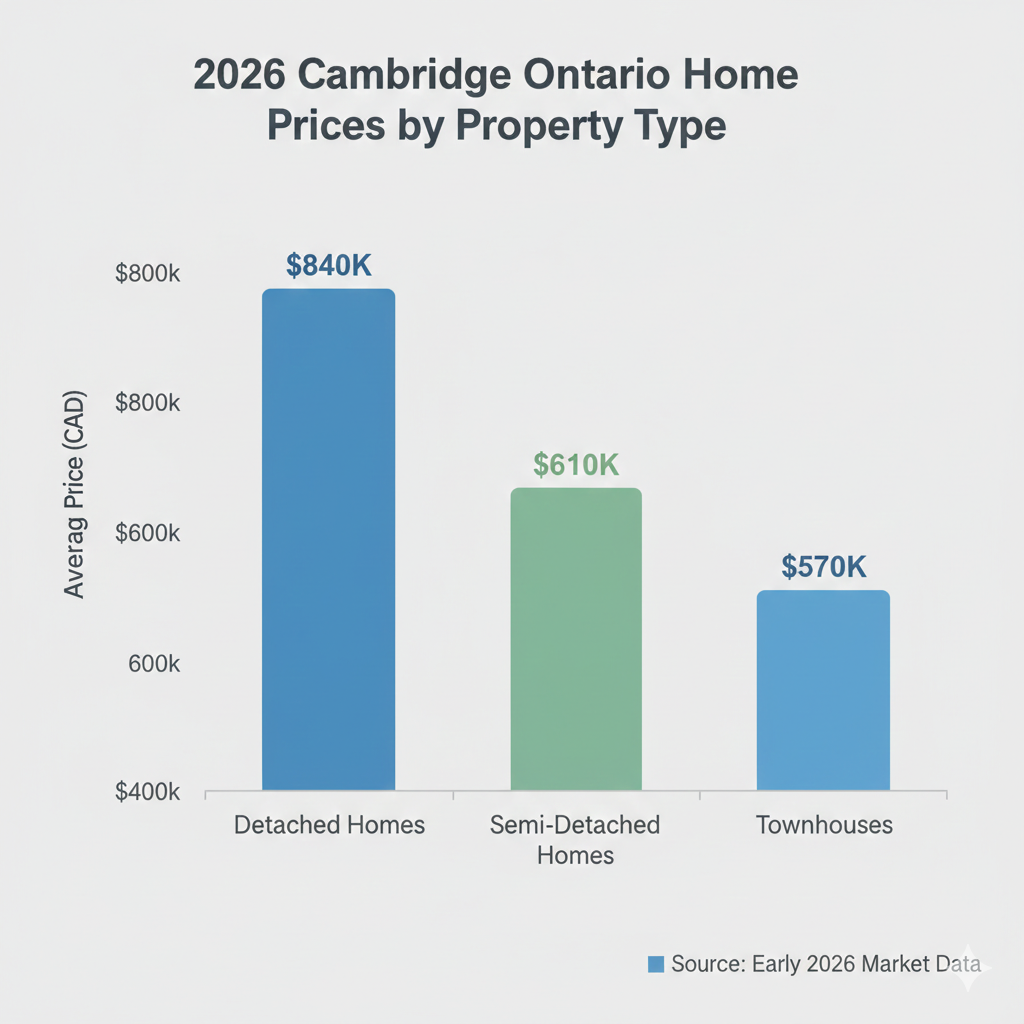
The inventory levels have seen a healthy recovery, currently sitting at 4.2 months of supply. This is the "sweet spot" for a balanced market—it prevents the aggressive price spikes caused by scarcity while ensuring sellers aren't left with properties sitting on the market for half a year. Interestingly, the detached segment continues to be the primary driver of value, with an average price point near $840,000, while the condo and townhouse sectors have become the go-to for first-time buyers and downsizers, often closing in the $450,000 to $600,000 range.
One unique insight for 2026 is the "Quality Flight" trend. Buyers are no longer settling for "as-is" properties just to get into the market. There is a visible premium being paid for homes that are "turn-key" or have undergone energy-efficient retrofits. With Waterloo Region housing trends prioritizing sustainability, homes with heat pumps or upgraded insulation are seeing shorter days-on-market than their unrenovated counterparts.
Cambridge is unique because it is a city of "three cores"—Galt, Hespeler, and Preston—each offering a distinct lifestyle and investment profile.
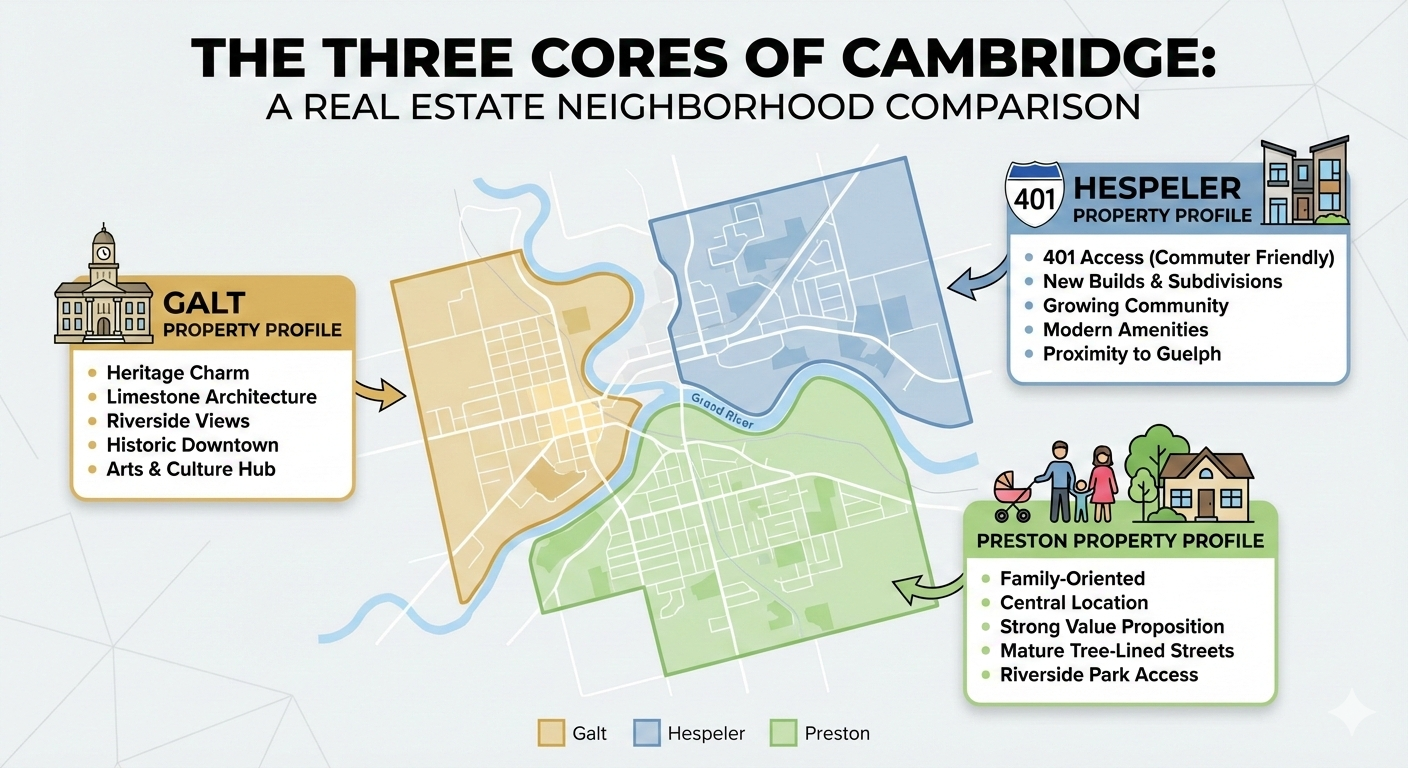
Hespeler remains the most popular choice for those working in the GTA or Guelph. Its proximity to Highway 401 makes it an unbeatable location for commuters. The revitalized downtown Hespeler, with its craft breweries and boutique shops, has injected a "younger" energy into the area. In 2026, we are seeing significant interest in the Hespeler Village real estate market for newer subdivisions that offer modern layouts.
If you value architecture, Galt is the crown jewel. West Galt heritage homes are famous for their stunning limestone facades and mature, tree-lined streets. This area attracts professionals and creatives who want a "European" feel within Ontario. South Galt is also emerging as a value-play, where mid-century bungalows offer excellent "fixer-upper" potential for those looking to build sweat equity.
Preston is often overlooked but offers some of the most consistent value in the city. It is geographically central, making it easy to access both the 401 and the amenities of Kitchener. The Preston community guide highlights the abundance of green spaces, such as Riverside Park, which makes it a top-tier choice for active families.
Buying a home in 2026 requires a shift in mindset. With the Bank of Canada maintaining a stable overnight rate of 2.25%, the mortgage affordability 2026 outlook is the most predictable it has been in a decade. 5-year fixed rates are currently hovering around 3.7% to 4.0%, allowing buyers to accurately forecast their carrying costs without the "rate-hike anxiety" of previous years.
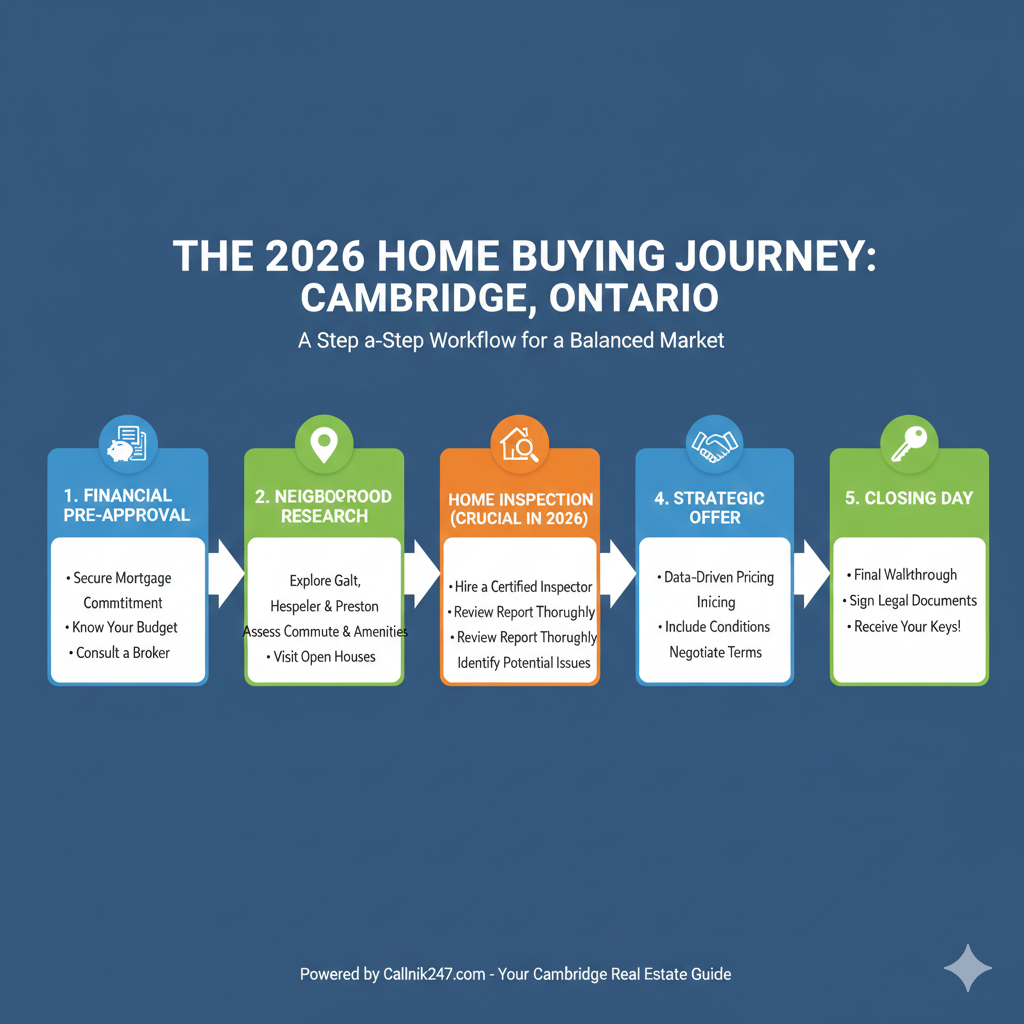
For those entering the market, your biggest advantage is time. In a balanced market, you can—and should—include conditions for home inspections and financing. A unique strategy for 2026 is the "Neighborhood Pivot." If a detached home in Hespeler is slightly out of reach, look toward Hillcrest or Preston. These areas often offer similar square footage for 10% to 15% less, simply because they aren't the primary "search terms" for most out-of-town buyers.
Don't forget to calculate your closing costs in Ontario. A common mistake for first-time buyers is forgetting the Land Transfer Tax (LTT). For a $700,000 home, you should budget approximately $10,475 for LTT alone (though first-time buyers may qualify for a rebate of up to $4,000).
In 2026, simply "listing" a home isn't enough; you have to market it. The era of the "blind bid" is largely over, and buyers are incredibly value-conscious. To achieve a top-tier sale price, selling your home in Cambridge now requires professional staging and high-end digital assets (3D tours and drone photography).
Strategic Pricing is the most critical factor. In a balanced market, overpricing your home by even 5% can lead to it becoming "stale" on the MLS, eventually forcing a price drop that signals weakness to savvy buyers. Instead, price your home at "Fair Market Value" to encourage multiple viewings in the first 14 days.
Unique Insight: Look at your "Curb Appeal 2.0." With the City of Cambridge investing heavily in "Green City" initiatives, sellers who showcase low-maintenance, native-species landscaping are attracting a niche but affluent group of buyers who prioritize environmental sustainability. If you can provide a history of low utility bills thanks to recent upgrades, make that a focal point of your listing.
Navigating the paperwork is where many deals can feel overwhelming. Beyond the purchase price, both parties need to be aware of the "hidden" financial frictions.
The Cambridge Ontario Real Estate Market in 2026 offers a refreshing change from the chaos of previous years. For buyers, the current environment provides a rare window of opportunity: stabilized interest rates combined with a healthy inventory that allows for thoughtful, unhurried decision-making. You are no longer just "buying a house"; you are investing in a community that is actively modernizing its transit and preserving its unique riverside heritage.
For sellers, the "easy money" era is gone, but the "smart money" era has arrived. By focusing on professional presentation, energy-efficient upgrades, and realistic pricing, you can still unlock significant equity from your home. Cambridge continues to be one of the most resilient pockets of the Waterloo Region, buoyed by its diverse economy and its role as a key transit hub for the 401 corridor.
Success in this market isn't about timing a "crash" or waiting for a "boom"—it's about understanding local neighborhood data and making a move that aligns with your long-term lifestyle goals.
Are you ready to find your next home or list your property in Cambridge? Reach out to a local expert today to get a personalized valuation or a curated list of "hidden gem" properties in Galt, Preston, and Hespeler.
1. Is it a good time to buy a house in Cambridge, Ontario in 2026?
Yes. With a balanced Cambridge Ontario real estate market, buyers have more negotiating power and the ability to include home inspections, which was nearly impossible during the 2022 peak.
2. Which Cambridge neighborhood has the best appreciation potential?
While Galt has historical prestige, Hespeler continues to see high demand due to its proximity to the 401 and ongoing commercial revitalization, making it a strong choice for long-term growth.
3. What are the average closing costs for a buyer in Cambridge?
You should budget between 3% and 4% of the purchase price. For a $700,000 home, this equates to roughly $21,000 to $28,000 covering land transfer taxes, legal fees, and adjustments.
4. How long are homes staying on the market in Cambridge right now?
In early 2026, the average "Days on Market" (DOM) is approximately 22 to 28 days, reflecting a healthy, balanced pace of trade.
5. Are there still bidding wars in Cambridge?
Bidding wars are rare and usually limited to exceptionally well-priced, "turn-key" detached homes in high-demand school zones. Most sales in 2026 involve standard negotiations.
Did this guide help you feel more confident about the Cambridge market? We are constantly updating our community data and would love to hear your thoughts. What is the one thing holding you back from making a move in Cambridge this year? Leave a comment below or share this post on social media!
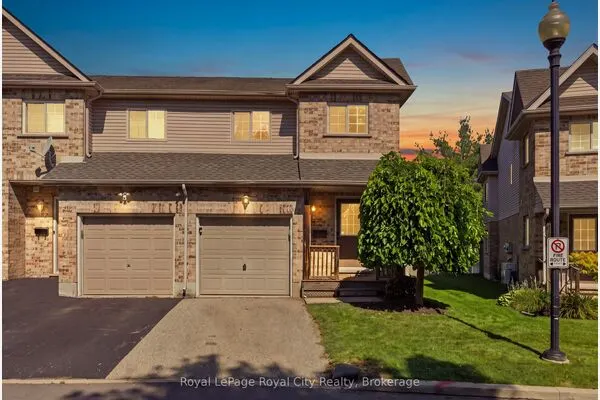
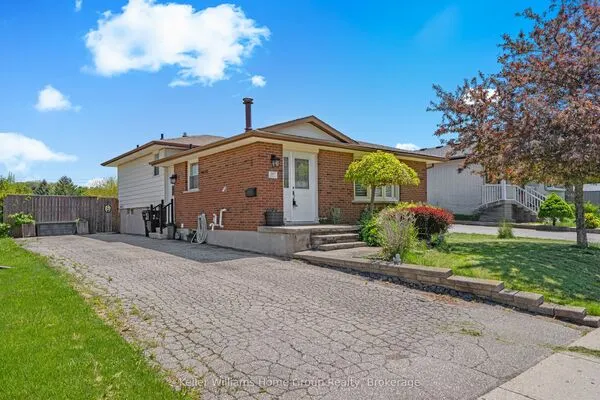
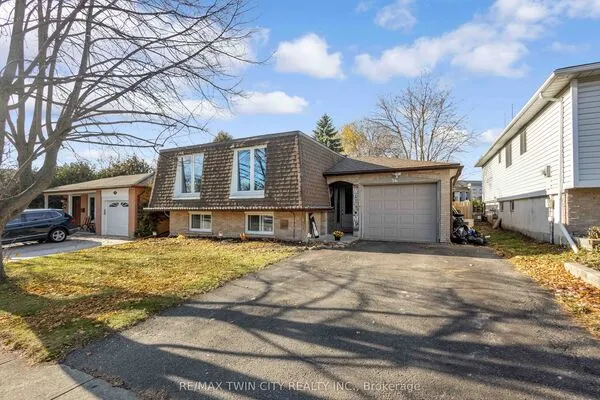
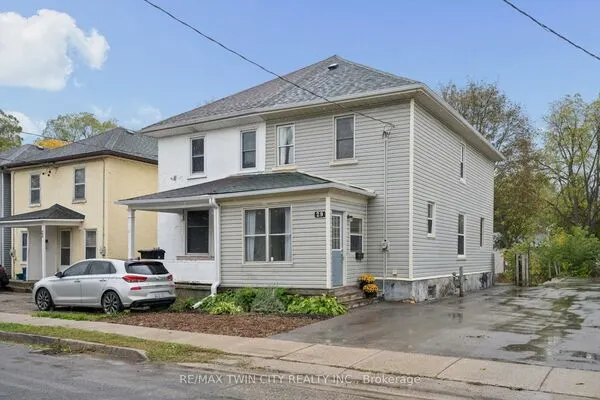
Ready to see what’s available?





<h1 style="font-family:'Playfair Display',serif; font-size:42px; color:#2A2F30; font-weight:700; margin-bottom:20px; line-height:1.3;">Ontario Land Transfer Tax: How to Calculate It, What...
<h1 style="font-family:'Playfair Display',serif; font-size:42px; color:#2A2F30; font-weight:700; margin-bottom:20px; line-height:1.3;">Buying a Home With a Legal Basement Suite in Ontario...