Buying Your First Home on Hamilton Mountain: The GTA's Last Sub-$700k Detached Market and How to Navigate It
Hamilton Mountain, Ontario is the last place in the GTA commuter belt where a first-time buyer can purchase a freehold detached home with a backyard and a garage for under $700,000. Not a townhome. Not a condo. A detached house on a 40–50 foot lot in a neighbourhood where kids play on the street and a neighbour waves from the driveway. That price point doesn't exist in Mississauga, Brampton, Burlington, or Oakville anymore. It barely exists in Hamilton's other sub-markets. It still exists on the Mountain — and for first-time buyers with the right commute profile and enough pragmatism about finishes, it changes the homeownership calculus completely. This guide maps exactly what you'll find, what you'll need to give up, and how to use the FHSA and RRSP programs to make the numbers work.
Not sure if Hamilton Mountain works for your commute and budget? Reply to this email or book a free 15-minute call with Nik — we'll run the numbers for your specific workplace, savings, and pre-approval before you spend a weekend at Mountain open houses wondering if it's for you.
Step 1: What Sub-$700k Detached on Hamilton Mountain Actually Looks Like
The first thing first-time buyers need to recalibrate when they research Hamilton Mountain is their mental image of what $650,000 buys. If that image is anchored on Mississauga or Brampton — where $650,000 is a two-bedroom stacked townhome — the Mountain feels almost implausibly generous. If it's anchored on Oakville or Burlington — where $650,000 barely touches a one-bedroom condo — it feels like a parallel universe.
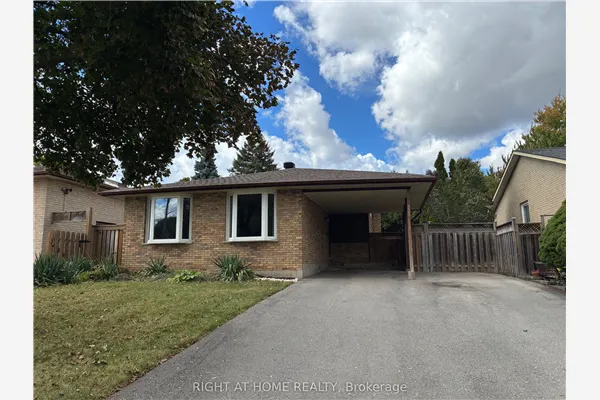
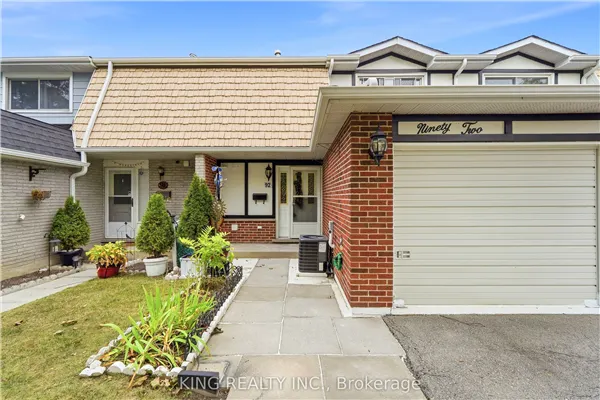
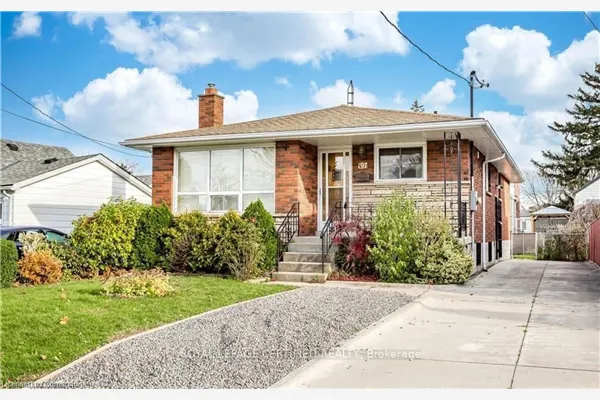
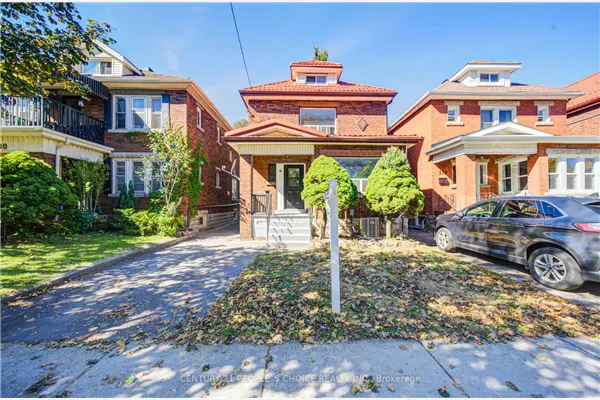
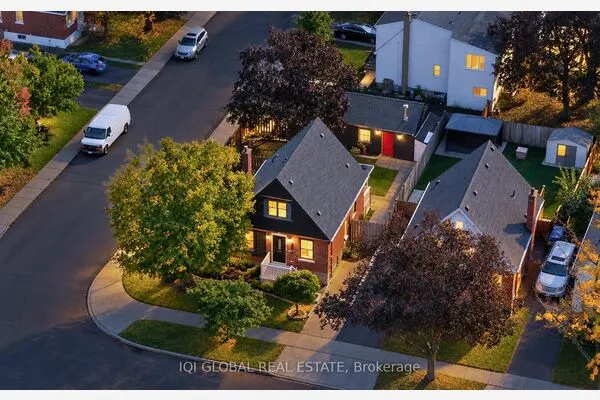
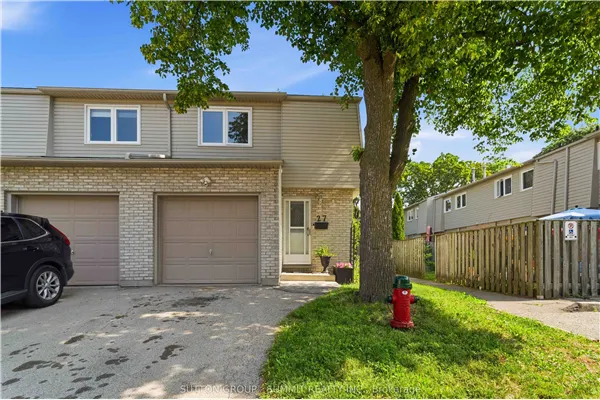
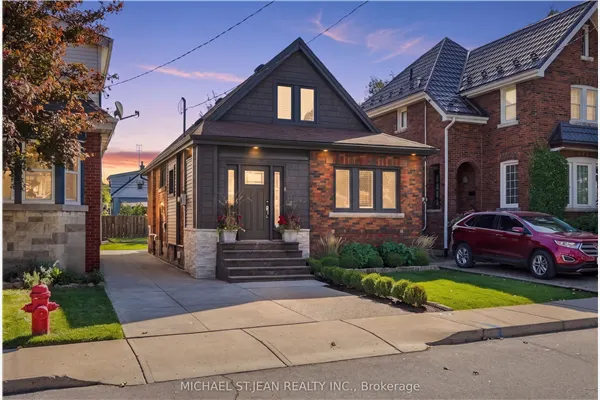
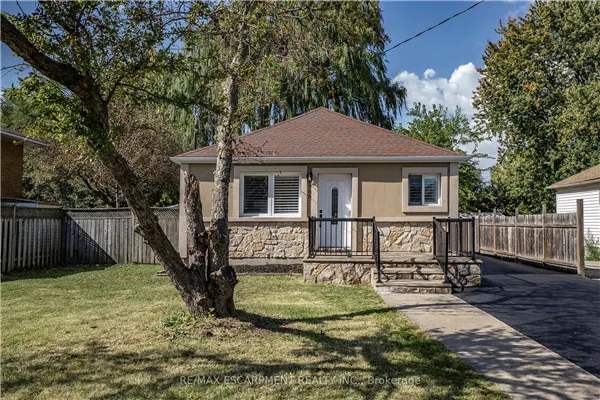
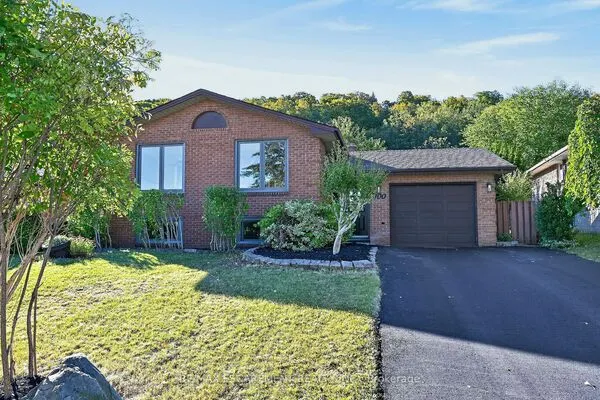
At $580,000–$700,000 on Hamilton Mountain, you're looking at a 1960s or 1970s detached home — brick or brick-and-siding two-storey or raised bungalow — on a 40–50 foot lot with a private driveway, an attached or detached single-car garage, and a real backyard with enough space for a deck, a garden, and a play structure. The home will have 1,000–1,400 square feet on the main floor, a finished or partially finished basement, and original-era kitchens and bathrooms that range from "dated but functional" to "genuinely needs replacement." The mechanical systems — roof, furnace, electrical panel, plumbing — are the variables that require careful home inspection, because a 1970s house that has been maintained is manageable, and one that hasn't been maintained is an expensive surprise. Browse the full range of Hamilton real estate to see what's currently active across all Mountain postcodes.
At $700,000–$820,000, the picture shifts: you're finding either a larger Mountain detached (1,400–1,800 sqft, double garage, better lot positioning) or a partially renovated home where a previous owner has already done the kitchen, the bathrooms, or the basement finishing. These properties represent the Mountain's move-up tier — still first-time buyer accessible for couples with combined incomes and the FHSA/RRSP stack — and they offer meaningfully better starting conditions for families who aren't ready to renovate immediately.
Step 2: The FHSA and RRSP Stack — How Hamilton's Price Point Changes the Math
Hamilton Mountain is the market where the federal first-time buyer programs work at their full potential, because the price point is low enough that government-advantaged savings can genuinely cover a meaningful portion of the down payment without requiring years of accumulated personal savings on top. Here's how the stack works at Mountain prices.
- First Home Savings Account (FHSA) — up to $40,000 per person. Contribute $8,000 per year (tax-deductible, tax-free withdrawal on qualifying purchase) up to a $40,000 lifetime cap. A couple who has been contributing for 3 years has $48,000 in combined FHSA savings — enough to cover 7% of a $680,000 Mountain purchase, before any other savings. If you haven't opened an FHSA and you're planning to buy in the next 1–3 years, open one immediately. Unused room carries forward one year only.
- RRSP Home Buyers' Plan (HBP) — up to $35,000 per person. Withdraw from existing RRSP savings tax-free (15-year repayment window). A couple with combined RRSP savings of $60,000 can access $60,000 under the HBP. Combined with the FHSA, a couple who has maximised both programs has access to $110,000–$150,000 in government-advantaged down payment capital.
- What that means at Mountain prices.On a $650,000 Mountain purchase:
- 20% down = $130,000 → achievable for a couple with maximised FHSA + partial RRSP HBP draw
- 10% down (insured mortgage) = $65,000 → achievable for a single buyer with 2–3 years of FHSA contributions and modest RRSP savings
- 5% down (insured mortgage) = $32,500 → accessible with 2 years of FHSA contributions alone for a single buyer
- Ontario Land Transfer Tax Rebate and First-Time Buyer Tax Credit. On a $650,000 purchase, the provincial LTT is approximately $9,475 before the first-time buyer rebate of $4,000 — reducing net LTT to approximately $5,475. The federal First-Time Home Buyers' Tax Credit generates approximately $1,500 in federal tax savings. Neither dramatically changes the affordability picture, but both reduce your closing cost burden on a transaction where every dollar of friction matters. For a comprehensive breakdown of the full Ontario FTB program stack, the Ontario first-time buyer strategy guide maps every program with worked examples.
Step 3: The Red Hill Commute — Who Hamilton Mountain Works For and Who It Doesn't
The commute question is the one that ends the Hamilton Mountain conversation for some buyers and unlocks it for others. There is no transit-friendly commute from the Mountain to Toronto's core. There is no GO Station within walkable distance of Mountain postcodes. Hamilton Mountain is a car commuter neighbourhood, and if your job requires daily in-person presence at a downtown Toronto office, the commute math works against you. If your job is in Hamilton, Burlington, Mississauga's corporate corridor, or if your employer offers hybrid flexibility — the math looks different.
- Hamilton city employment (McMaster, Hamilton Health Sciences, City of Hamilton): 15–22 minutes via Lincoln Alexander Parkway or Mohawk Road. Hamilton Mountain is effectively a local commute for most Hamilton employment — this is the buyer profile where the Mountain works best.
- Burlington employment corridor (any node): 25–35 minutes via Red Hill Valley Parkway to QEW westbound. For Burlington-employed buyers, the Mountain is the most affordable address at a commute distance that remains manageable on a daily basis.
- Mississauga corporate corridor (Hurontario / Erin Mills): 35–50 minutes via Red Hill and QEW westbound. Peak-hour additions of 15–25 minutes. Viable for 3-day in-office schedules. Challenging for daily 5-day presence.
- Oakville employment (any node): 30–40 minutes via Red Hill and QEW westbound. Similar to Burlington — strong candidate for Mountain buyers employed in Oakville.
- Downtown Toronto (Union Station area): 65–80 minutes via Red Hill, QEW, and Gardiner Expressway off-peak. 90–110 minutes during peak. Not a viable daily car commute. For Toronto-employed buyers: consider Hamilton proper (lower city, closer to GO options) or look at Stoney Creek where QEW geometry to Union Station is slightly better.
- Remote / hybrid (2–3 days in office anywhere in GTA West): Hamilton Mountain works for almost any hybrid arrangement where in-office days are 2–3 times per week. The carrying cost savings versus a comparable Mississauga or Brampton property are $800–$1,500 per month — enough to absorb the commute costs and still come out ahead.
Step 4: Which Mountain Streets to Target — and Which to Avoid
Hamilton Mountain is not a uniform neighbourhood — it spans a large area with meaningful variation in street character, lot quality, and proximity to the amenities that matter. First-time buyers who research at the neighbourhood level and don't drill down to the street level consistently make the mistake of buying in the wrong pocket. Here's the framework.
Target: Central and West Mountain (L8V, L8T)
The L8V and L8T postcodes — central and west Mountain — are the strongest first-time buyer target area for three reasons: Red Hill Parkway access is 5–8 minutes from most addresses, the lots in this corridor tend to be slightly wider (45–55 feet) than east Mountain equivalents, and the Mountain's best commercial nodes (Limeridge Mall area, Mohawk Road retail) are within easy reach. Streets backing onto Chedoke Creek valley sections or with escarpment views on the Mountain's western edge also carry modest green-space premiums that can aid resale. Homes in this pocket are consistently the Mountain's fastest-moving properties, with DOM averaging 12–20 days in seller conditions.
Approach With Research: East Mountain (L8W, L8K)
East Mountain postcodes offer the Mountain's lowest entry prices — which attracts first-time buyers who have exhausted their budget in central Mountain. The trade-off is a longer drive to the Red Hill Parkway (adding 8–12 minutes to any westbound commute), slightly smaller lots in some pockets, and more variation in street-by-street character. There are excellent streets in east Mountain with strong community character and solid resale profiles — but there are also streets where the buyer pool on resale is narrower and DOM runs longer. Research at the street level, not the postcode level, before committing.
The School Picture on the Mountain
Hamilton Mountain's school options are functional but not premium. Public elementary schools within the Hamilton-Wentworth District School Board are accessible from most Mountain addresses, with several Catholic schools through the Hamilton-Wentworth Catholic District School Board providing parallel options. Secondary schools include Hill Park Secondary, Westmount Secondary, and Mountain Secondary — established schools with broad programming but without the AP or IB tracks found in Ancaster or Dundas secondary schools. For first-time buyers who don't yet have school-age children, this is often a secondary consideration. For buyers whose timeline includes school enrollment within 3–5 years, it's worth mapping your specific address against catchment boundaries before purchasing — Mountain catchments have shifted over the years as enrollment patterns changed.
Step 5: The Hamilton Mountain Trade-Off Checklist
Every first home involves trade-offs. On Hamilton Mountain, the trade-offs are specific and predictable — and knowing them in advance separates buyers who close with confidence from those who spend eight months second-guessing.
Safe to Accept on the Mountain:
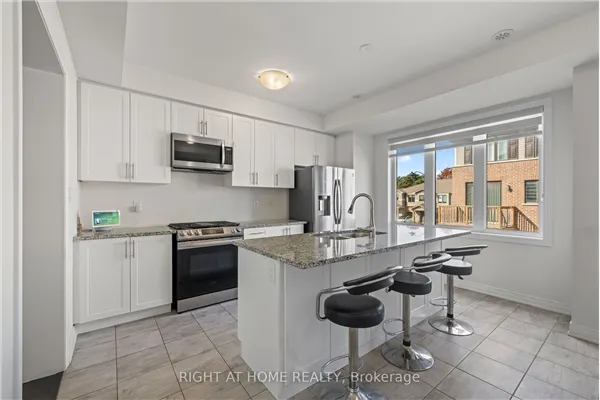
- 1970s kitchens and bathrooms. An original avocado-green kitchen is not a structural problem. Budget $35,000–$55,000 to renovate it over years 2–4 of ownership after building equity. You're buying land and location, not finishes.
- Single-car garage. On most Mountain detached homes, single-car garages are standard. A wide driveway on a 45-foot lot typically accommodates 2–3 vehicles comfortably.
- No GO train proximity. The Mountain is a car neighbourhood. Accept that upfront or buy somewhere with GO access.
- Neighbourhood prestige. Hamilton Mountain doesn't carry an Ancaster or Roseland brand. That is precisely why it's priced where it is. The underlying asset — freehold land, real backyard, genuine square footage — is permanent.
- Older street trees and mature landscaping quirks. Mountain streets have genuine character from their age. The trees are large enough to drop branches. The roots sometimes affect driveways. This is the trade for the canopy that new builds take 30 years to develop.
Do Not Compromise On the Mountain:
- Home inspection. Non-negotiable on any Mountain purchase. Knob-and-tube wiring, old oil tanks, galvanized plumbing, and foundation issues are all present in the Mountain's 1960s–1970s stock. A $500 inspection against a $650,000 purchase is the highest-ROI line item in your transaction.
- The electrical panel. Older homes may have 60-amp or fuse-box panels that require upgrading for modern loads (EV chargers, central A/C, induction cooktops). A panel upgrade runs $2,500–$5,000. Know before you close whether it's already been done.
- Commute verification before offering. Drive your actual commute route from the specific address at the time of day you'd be doing it. Mountain drive-time estimates vary significantly based on which access point you use and what time you're leaving.
- Your budget ceiling. Mountain competition is real — sub-$700k detached homes with reasonable condition attract multiple offers in spring. Do not stretch beyond your pre-approved ceiling in the emotion of a bidding situation. The Mountain's sub-$700k price point exists; going to $750k to win isn't necessary if you're patient.
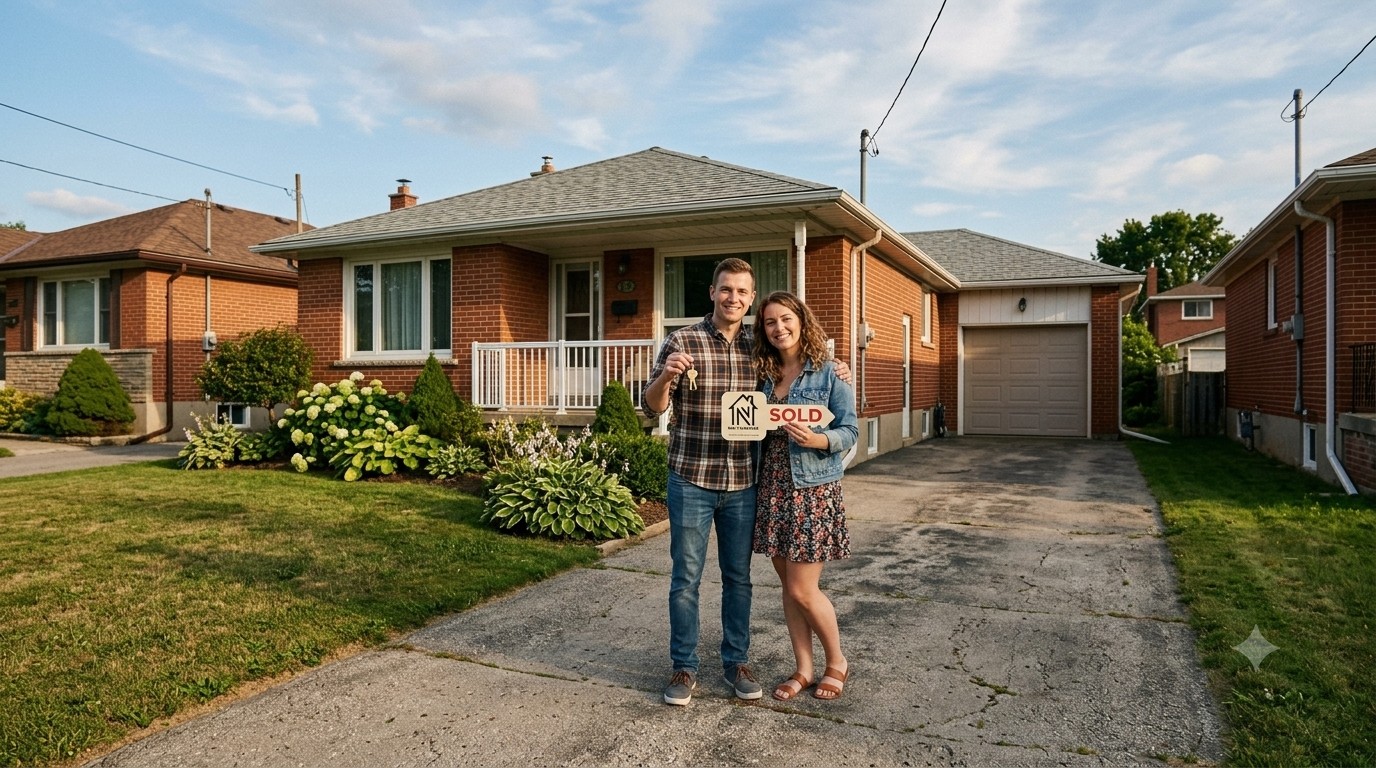
The Mountain purchase I consistently steer first-time buyers toward is a 1960s or 1970s detached bungalow or raised bungalow on a 45–50 foot lot in the L8T postcode — specifically on streets that are within 2 km of the Limeridge Mall intersection on Upper Wentworth Street. These homes are close to the Mountain's best commercial node, have easy Red Hill access via the Lincoln Alexander Parkway, and the lot depths are often 110–120 feet — enough for a real backyard that could eventually accommodate an accessory dwelling unit under Hamilton's infill policies. The bungalow format is also a structural advantage: one floor means no staircase maintenance or accessibility concerns as you age, and the conversion to legal secondary suite (basement) is simpler with bungalow layouts than with two-storey builds. I've seen buyers in these specific properties build $180,000–$220,000 in equity over 5 years through a combination of market appreciation and targeted renovation — enough to make a meaningful move toward Ancaster or Stoney Creek for their second purchase.
Browse Hamilton Mountain Listings — L8V and L8T Postcodes
Active detached, semi-detached, and bungalow listings filtered to the central and west Mountain postcodes. Updated daily.
Browse Hamilton Mountain Homes →Browse All Hamilton Listings →
Or book a free 15-minute call with Nik — bring your pre-approval number and your workplace address and we'll tell you honestly whether Hamilton Mountain makes financial and logistical sense for your situation.