Binbrook, Hamilton: The New-Build Rural Community Offering Ancaster Square Footage at a 25% Discount
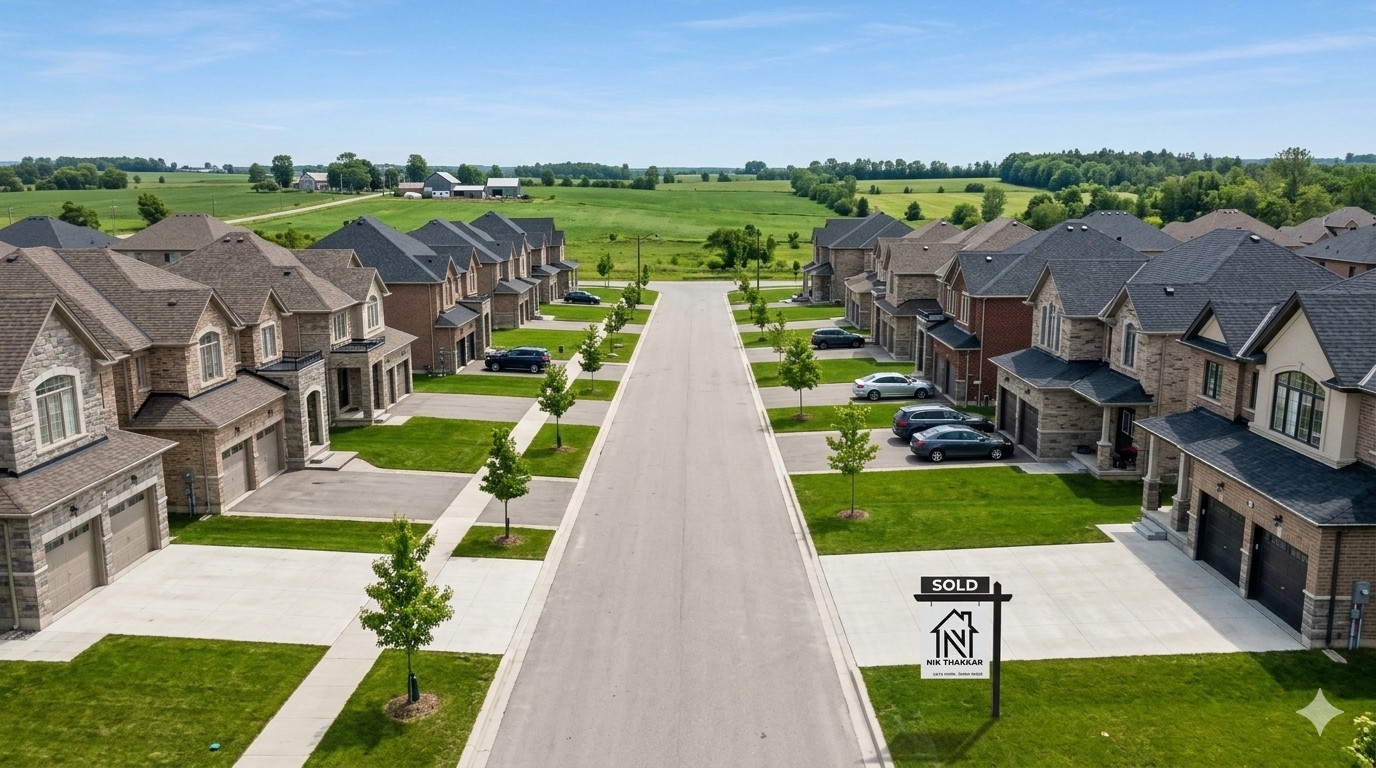
Binbrook real estate sits in the $750,000–$1,050,000 range for detached homes — 20–30% below Ancaster pricing for comparable or larger square footage on similar or bigger lots. The structural reason for that gap is straightforward: Binbrook is rural, car-dependent, and carries no prestige-neighbourhood premium. The structural reason the gap is an investment thesis rather than a permanent condition is equally clear: Binbrook is a new-build community, it's expanding, and the Hamilton buyers who are already priced out of Ancaster are looking east and south. This post maps Binbrook's home prices against Ancaster, examines the sold transaction data for the L0R postcode, quantifies the lot-size advantage, walks through the 403 commute geometry, and profiles the four buyer cohorts currently transacting in the Binbrook market.
Evaluating Binbrook as an investment or relocation target? Reply to this email or book a free 15-minute call with Nik — we'll map specific streets and subdivisions against your square footage requirements, lot size priorities, and commute pattern before you make any commitments.
Binbrook vs Ancaster: The Price, Lot Size, and Build Quality Comparison
The buyer who most consistently discovers Binbrook is the one who was researching Ancaster, ran the numbers, and asked: "What am I actually paying for the Ancaster premium, and does it justify the gap?" In many cases the honest answer is that Ancaster's premium is comprised of three things — an established executive neighbourhood brand, school catchment positioning (Ancaster Senior Public, Ancaster HS), and escarpment adjacency. For buyers to whom those three factors are decisive, Ancaster earns its premium. For buyers to whom square footage, lot size, and modern finishes matter more than neighbourhood prestige, the comparison below resolves differently. All figures represent approximate current market ranges and should be used as directional benchmarks.
| Category | Binbrook (L0R) | Ancaster (L9G/L9K) | Stoney Creek (L8E/L8G) |
|---|---|---|---|
| Avg Detached Price | $750k – $1.05M | $1.05M – $1.45M | $750k – $1.05M |
| Typical Sqft (detached) | 1,800 – 2,800 sqft | 2,200 – 3,400 sqft | 1,500 – 2,200 sqft |
| Est. Price/Sqft | ~$370–$420/sqft | ~$390–$470/sqft | ~$390–$465/sqft |
| Typical Lot Frontage | 40–65 ft (standard); 80–200 ft (estate) | 50–80 ft (standard); 100–200 ft (estate) | 40–55 ft |
| Build Vintage | 2005–2024 (predominantly new builds) | Mixed 1980–2020 (older estate + new pockets) | Mixed 1970–2015 |
| GO Transit Access | None — car-dependent | None — car-dependent | West Harbour GO nearby; Aldershot GO 15 min |
| 403 / Highway Access | 20–28 min to 403 via Hwy 56 and Red Hill | 8–15 min to 403 direct | 5–8 min to Red Hill / QEW |
| Best Fit Buyer | Rural lifestyle, WFH, Hamilton city employment, space-first buyers | Executive prestige buyers, school-catchment-driven families | GTA commuters, lakefront lifestyle, QEW-dependent employment |
The table reveals Binbrook's defining structural advantage: it is Hamilton's only sub-market offering 2,000+ square feet of new-build detached housing on a 50–65 foot lot for sub-$900,000. That combination doesn't exist in Ancaster (too expensive), Stoney Creek (smaller lots and older stock at similar prices), or on the Mountain (older builds, smaller square footage at the lower end of Binbrook's range). Buyers who specifically need a newer home with space — home office, growing family, room for in-laws — and who can accommodate a car-dependent lifestyle find Binbrook's value proposition difficult to replicate anywhere else in the Hamilton market. This context sits within the broader Hamilton sub-market arbitrage analysis mapping all four Hamilton pockets simultaneously.
Binbrook's New-Build Profile: What the Housing Stock Actually Looks Like
The New-Build Advantage
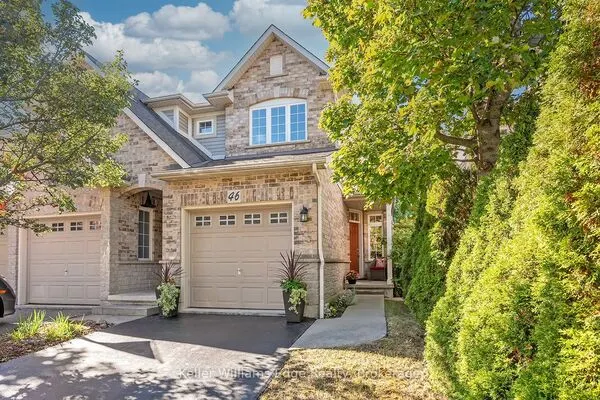
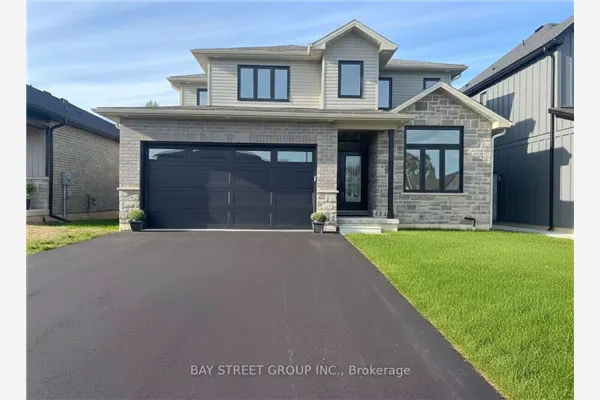
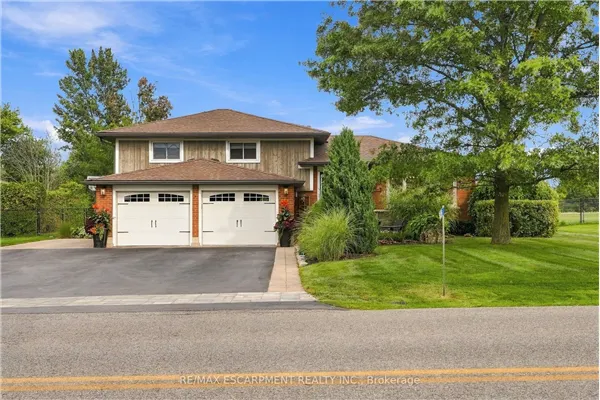
Binbrook's housing stock is almost entirely post-2005, with a large proportion of the community built between 2015 and 2024. This means buyers are purchasing homes in the mechanical sweet spot: past the early-build infrastructure issues (road settling, drainage calibration) but before the deferred maintenance cycle that affects 1990s and early 2000s builds approaching their 25–30 year systems replacement window. Open-concept great rooms, 9-foot main-floor ceilings, double and triple car garages, and Energy Star certification on the newest builds are standard rather than premium. The renovation uplift play that drives value in Stoney Creek and the Mountain doesn't apply in Binbrook — what you see is what you get, which significantly simplifies due diligence and reduces post-purchase capital expenditure risk.
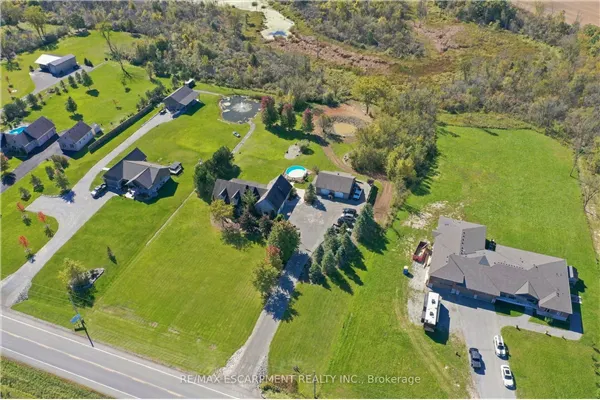
The dominant builders active in Binbrook over the past 15 years include mid-to-large Ontario developers who have completed multiple Hamilton-area subdivisions, bringing standardised build quality and familiar warranty structures. The Binbrook Heights, Shadow Ridge, and Mount Hope subdivisions represent the community's main residential expansion corridors, each with its own street character ranging from tighter 40-foot lots near the community core to semi-estate configurations on the eastern and southern perimeter. Buyers targeting the largest lots should look specifically at the eastern edge of Binbrook's growth boundary and the Mount Hope L0R pocket, where 80–200 foot frontages are available at estate premiums of $950,000–$1.4M+ — still meaningfully below equivalent Ancaster estate pricing.
Community infrastructure has tracked housing growth at a pace faster than many comparable Hamilton-area rural expansions. Binbrook has a functioning commercial core on Binbrook Road with grocery, pharmacy, and medical services. Elementary schooling is served by Bishop Ryan Catholic Secondary and local HWDSB elementary facilities, with secondary students typically bussed to Hamilton Mountain secondary schools. This is not a fully self-contained community — for secondary schooling, medical specialties, and significant retail, Binbrook residents drive to Hamilton proper. Browse all active Hamilton real estate across postcodes to benchmark Binbrook within the full market context.
Recent Sales Activity in Binbrook: Sold Data, DOM, and Transaction Patterns
For buyers and investors researching houses sold in Binbrook over the recent transaction cycle, the L0R postcode data reveals a market with moderate but consistent liquidity — thinner transaction volume than Stoney Creek, but with buyer conviction that holds pricing firm against list. The L0R postcode covers a wider geography than Binbrook proper (including Mount Hope, Copetown, and rural Hamilton parcels), so the figures below represent Binbrook-specific transaction patterns extracted from the broader postcode pool.
| Metric | Binbrook Detached (recent) | vs Stoney Creek | What It Signals |
|---|---|---|---|
| Avg Days on Market | 25–38 days | 18–28 days (SC faster) | Narrower buyer pool — car-dependent location limits demand to specific buyer profiles |
| Sale-to-List Ratio | 97–101% | 97–103% (comparable) | Correctly-priced homes not discounting — buyer conviction holds at list |
| Monthly Transaction Volume | 5–9 closed sales/month | 18–28 combined (SC higher) | Thinner liquidity — longer hold timelines appropriate; not a short-flip market |
| Estate Lot Premium | 12–20% vs standard lots | N/A (SC no estate lots) | Estate-lot demand is specific and buyer-profile dependent — not universal premium |
| Seasonal Pattern | Spring peak (Apr–May), secondary fall window (Sep–Oct) | Similar pattern | School-transition buyers dominate; summer and winter windows thin but exist |
The sold data for Binbrook reveals a market best suited to buyers with 5–10 year holding horizons rather than those seeking rapid liquidity. Transaction volume of 5–9 closings per month in a community of roughly 12,000 residents is a healthy but not deep market — meaning that overpriced listings sit significantly longer than market-priced ones, and buyers who need to transact quickly should price for the buyer pool rather than anchoring to aspirational comparables from Ancaster. For the most current view of recently sold properties in Binbrook and the L0R postcode, browse the live Binbrook and L0R sold listings directly.
Highway 403 and Red Hill Access: Understanding the Binbrook Commute Honestly
Binbrook's commute story requires honest framing rather than optimistic spin. This is a rural community 20–28 kilometres south of Hamilton's urban core, with no GO transit, no local bus service worth using for commuting purposes, and no cycling infrastructure connecting to employment centres. Anyone buying in Binbrook who works outside the home needs a car, needs comfort with rural driving distances, and needs to model the commute geometry specifically against their workplace before committing. That said, the commute geometry for the right workplace is more workable than Binbrook's positioning on a map suggests.
From a central Binbrook address on Binbrook Road, Highway 56 north connects to the Red Hill Valley Parkway in approximately 15–18 minutes, providing onward access to the 403, QEW, and the Lincoln Alexander Parkway. Off-peak drive times to key nodes:
- Hamilton City Core (McMaster University, Hamilton Health Sciences, Downtown): 20–28 minutes via Highway 56 north to King Street. This is Binbrook's strongest commute case — Hamilton's largest single employers are comfortably accessible.
- Hamilton Mountain (commercial, medical, retail employment): 18–24 minutes via Highway 56 to Rymal Road. Binbrook effectively functions as an outer Mountain commuter community.
- Stoney Creek and QEW eastern corridor: 20–28 minutes via Highway 56 to Fruitland Road / QEW. Opens access to Grimsby, Beamsville, and Niagara employment.
- Burlington employment corridor: 40–50 minutes via Highway 56 north, Red Hill, and QEW westbound. Manageable for 3-day in-office schedules; significant for daily commuters.
- Mississauga and GTA West: 55–70 minutes off-peak via Red Hill and QEW. Not a viable daily commute; appropriate for remote-first professionals with occasional in-person requirements.
- Toronto (downtown): 75–95 minutes off-peak. Binbrook is not a Toronto commuter community. Buyers targeting Toronto employment should look at Stoney Creek or consider Hamilton proper.
The commute profile that makes Binbrook work is Hamilton-centric employment combined with full or partial remote work. The community's most consistent buyer demographic confirms this: Hamilton city employees (Police, Fire, Hydro One, City of Hamilton administration), Hamilton health care workers (Hamilton Health Sciences, St. Joseph's Healthcare), McMaster University faculty and staff, and remote-primary professionals who need to be in Hamilton offices 1–3 days per week. For buyers in those categories, Binbrook's commute is genuinely manageable and the value proposition — more house, more lot, lower price — is difficult to replicate within Hamilton's established neighbourhoods.
The Four Buyer Profiles Currently Transacting in Binbrook
Understanding who is buying in Binbrook — and why — is the clearest signal of where the market is heading. Four distinct buyer cohorts currently account for the majority of Binbrook transactions, each operating on different logic and different timelines.
- Hamilton city employees upgrading from the Mountain. The most consistent buyer cohort in Binbrook is the Hamilton family living on the Mountain in a 1970s semi or detached, accumulating equity over 7–10 years, and seeking the combination of a newer build, more square footage, and a quieter lifestyle that the Mountain no longer provides at their budget. For a Mountain family selling a $700,000 semi and seeking a $900,000–$950,000 purchase, Binbrook delivers 2,400 square feet of newer construction on a 50-foot lot — a transaction that simply doesn't work in Ancaster at those price points.
- Remote-first professionals from the GTA. Post-2020 remote work normalisation has extended Binbrook's GTA buyer reach significantly. A software developer, consultant, or marketing professional who is in a Mississauga or Toronto office 1–2 days per week can reasonably tolerate a 55–70 minute off-peak drive on those days while purchasing 2,600 square feet with a home office, a triple-car garage, and a rural backyard at $875,000. That same professional in Mississauga pays $1.25M for 1,900 square feet. The remote-work arithmetic resolves clearly for buyers whose employers have committed to hybrid flexibility.
- Rural lifestyle seekers from Burlington and Oakville. A smaller but growing cohort is arriving from Burlington and Oakville specifically seeking the rural lifestyle trade that Binbrook offers — space, quiet, and agricultural surroundings — at a price point that represents a meaningful step down from their selling price. A Burlington downsizer selling a $1.3M Roseland home can purchase a 2,500 sqft Binbrook property with an estate lot for $975,000 and bank the difference. This buyer is typically 55+, has already optimised their career commute, and is making a lifestyle-driven decision rather than an investment-driven one.
- Patient value investors building long-term Hamilton positions. A smaller segment of buyers transacting in Binbrook are investors with 10–15 year horizons who view the community's expansion trajectory — and Hamilton's general direction as a GTA overflow market — as the appreciation driver. These buyers are typically purchasing premium lots at the estate tier ($950,000–$1.2M) rather than standard subdivision lots, and holding for capital appreciation rather than rental income (Binbrook's rental market is thin and yield-focused investors should look at Hamilton Mountain or Stoney Creek instead).
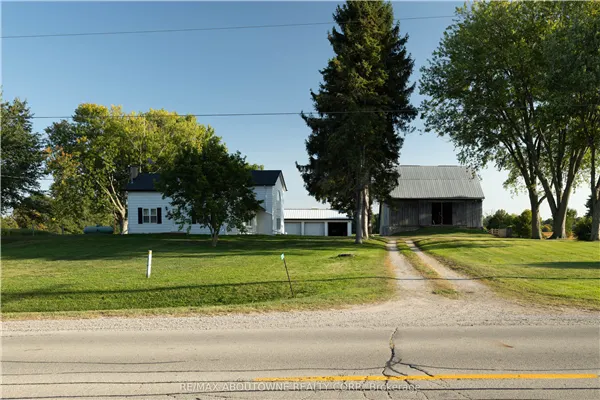
The Binbrook purchase that consistently delivers the best 7-year outcome is a 2015–2020 build on a 55–60 foot lot in the Binbrook Heights pocket, specifically on the streets where lot depths exceed 130 feet and the rear yard backs onto undeveloped agricultural land rather than another subdivision phase. That rear boundary matters because it buys you 5–10 years before the next development phase closes in — and that visual openness is exactly what the lifestyle buyer cohort coming from Burlington and Oakville is paying for. When Binbrook's expansion boundary eventually absorbs those rear fields (it will, on a long enough timeline), the premium for that open exposure converts into infill appreciation. Buy the lot that still has something behind it. In 8 years, they'll all be looking at another house.
Browse Binbrook Active Listings and Sold Data
Filter to the L0R postcode for active Binbrook listings and recently sold properties — the fastest way to benchmark current home prices and lot sizes.
Browse Binbrook Listings →View Recently Sold Binbrook Properties →
Or book a free 15-minute call with Nik to map specific Binbrook subdivisions against your square footage, lot, and commute requirements.